
What Family Offices Should Know Before Investing in Las Vegas. The Edge Is Local, Not the Tax Code.
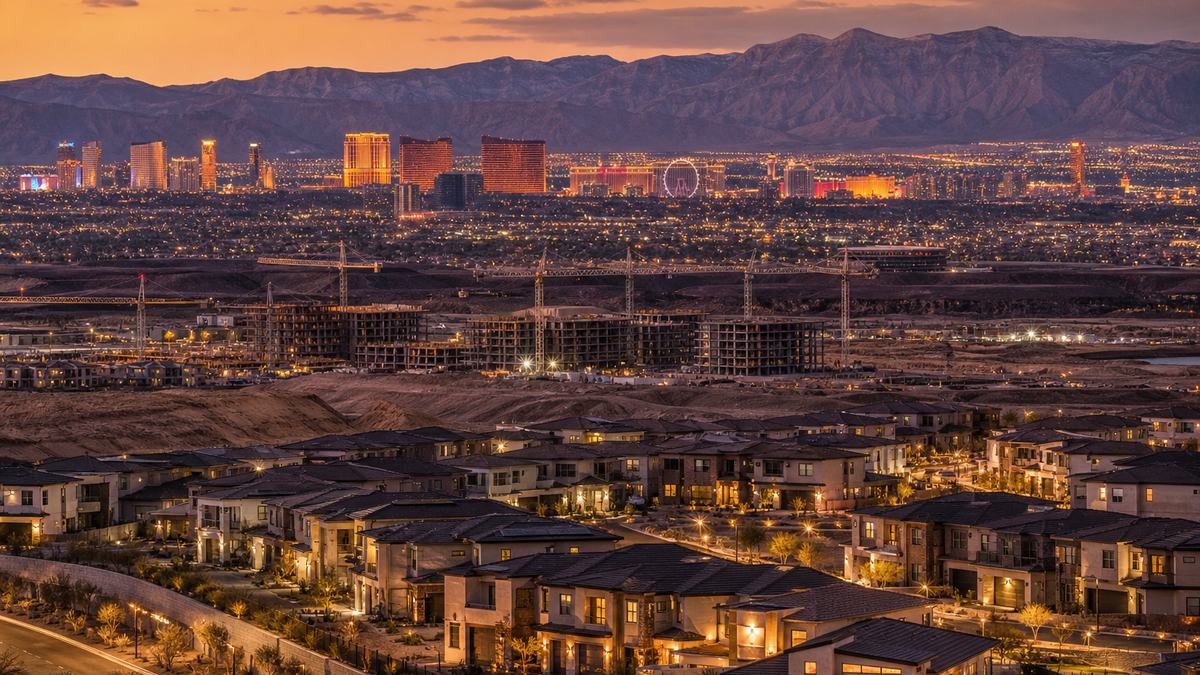
More family offices are looking at investing in Las Vegas than at any time we can remember. The pitch is easy to make: no state income tax, a population that keeps growing, a city that keeps building stadiums, and land that is running out. Most of that is true. But the families who do well here are rarely the ones who arrive with the pitch. They're the ones who understand how Southern Nevada actually works: who controls the land and the water, how gaming regulators look at new money, why the tourism economy swings, and which local partners can get a project from a site plan to a certificate of occupancy.
We've spent our careers on the principal side of the table. InTooWin's partners bring 30+ years of combined experience building, operating and exiting ventures, from industrial water and aggregate supply to the 320-acre, $283 million Legacy Sports Complex in Mesa, Arizona. Today we're investing in Las Vegas ourselves, including a casino acquisition that is going through Nevada gaming licensing and a ground-up assisted living community. This guide is what we'd tell a family office over coffee before it commits its first dollar here.
Nevada's tax and trust laws are a real advantage, but they're the entry ticket, not the edge. Returns in Las Vegas come from local execution.
- Structure: Nevada has no personal or corporate income tax and no estate, gift or inheritance tax, and allows dynasty trusts of up to 365 years. Most of that benefit is available without buying a single local asset.
- The market: mixed. Unemployment is improving, industrial is recovering and office is tightening, but multifamily rents are slipping and tourism is still digesting a down 2025.
- The real constraints: land (more than 80% of Nevada is federally managed), water (Lake Mead) and gaming regulation.
- Where we see opportunity: needs-based real estate, infrastructure-adjacent industrial, owner-operated hospitality and services, and patient land positions.
- Our view: partner locally, stage capital, and underwrite to today's Las Vegas, not the renderings.
Why family offices are looking at Las Vegas now
Family offices worldwide are rethinking where their money sits. The UBS Global Family Office Report 2026, which surveyed 307 family offices with an average net worth of $2.7 billion, found that 60% plan to change their strategic asset allocation over the next 12 months, the highest share UBS has recorded. UBS describes a broad tilt toward alternatives such as infrastructure and a reduced exposure to real estate overall. US family offices are the most home-biased in the world, with 88% of their portfolios in North America, and they report strong interest in infrastructure themes.
Read those two findings together and you get the setup for Las Vegas. Family offices aren't buying "real estate" as a category right now. They're looking for specific, cash-flowing assets tied to long-term themes: population growth, infrastructure, logistics, healthcare and an aging population. Southern Nevada has all of those themes in one valley, which is why it keeps showing up on investment committee agendas.
The local economy has also steadied after a rough stretch. Nevada's unemployment rate fell to 4.7% in September 2026, down from 5.2% a year earlier, and the Las Vegas metro rate was 4.8%, down from 5.7%, according to the state's DETR data. Northmarq reports the metro added about 21,400 jobs in the year to the third quarter. That's not a boom, but it's a far better footing than late 2025.
The Nevada advantage: real, but not the edge
The first thing most families hear about Nevada is tax. It's worth getting the facts right, because they're often overstated.
| Item | What Nevada offers | What it means in practice |
|---|---|---|
| Income tax | No personal or corporate state income tax | Matters most for families or operating businesses actually based in Nevada |
| Estate, gift, inheritance tax | None at the state level | Federal estate and gift rules still apply |
| Commerce Tax | Applies to businesses with Nevada gross revenue above $4 million a year, with rates by industry | Operating businesses here should model it; it's a gross receipts tax, not an income tax |
| Dynasty trusts | Trusts can last up to 365 years | Useful for multi-generational planning, regardless of where assets sit |
| Trust flexibility | Decanting, trust protectors and advisors, self-settled spendthrift trusts | A favorite jurisdiction for trust situs; a Nevada trustee can often be appointed without the family relocating |
| Property tax | Annual increases on a resident's primary home capped at 3% (other property has a higher cap) | Helpful, but commercial owners should still model reassessment |
Here's the point that gets missed: most of the trust and tax benefit doesn't require owning anything in Las Vegas. A family can establish Nevada trust situs and keep every asset elsewhere. So the tax story explains why wealth is moving to Nevada, but it's not a reason, on its own, to buy a building on Flamingo Road.
Treat Nevada's tax and trust regime as a structuring decision and the Las Vegas market as an investment decision. When a deal only looks good because of the tax story, it usually isn't a good deal. Every asset here should stand on its own cash flow, its own location and its own operator.

Know the market you're actually buying
Las Vegas is not one market. It's a tourism economy wrapped around a fast-growing metro of more than two million people, and the property types are moving in different directions. Here is how the major sectors looked at the end of the third quarter of 2026:
| Sector | Q3 2026 snapshot | How we read it |
|---|---|---|
| Industrial | Vacancy 8.7%, down from a cycle high of 10.4% a year earlier; about 1.5 million sq. ft. absorbed in the quarter (CBRE) | The supply wave is being digested; recovery is real but not finished |
| Multifamily | Vacancy 9.1%; average asking rent $1,479, down 1.4% year over year; cap rates around 5.4% (Northmarq) | Soft rents today, but the construction pipeline is down more than 25% from late 2025, which sets up a tighter 2027–2028 |
| Office | Vacancy about 9.1%, down from 10.2% a year earlier; asking rents about $2.54/sq. ft. NNN (Lee & Associates) | One of the healthier office markets in the West, driven by medical and local service tenants |
| Tourism | 2025 visitation was about 38.5 million, down 7.5%; September 2026 was roughly flat year over year at nearly 3.1 million visitors (LVCVA data) | The slide has stopped; growth hasn't returned yet |
The takeaway is that timing and asset type matter more than the city's headline story. A family office that bought multifamily at the 2022 peak is living through falling rents. One that buys well-located apartments in 2026, with the pipeline shrinking, may be buying near the bottom of the rent cycle. We covered this dynamic in detail in our pieces on the tourism reset and housing affordability and build-to-rent.
The three constraints that set the rules
Every serious Las Vegas investment eventually runs into one of three local realities. Outside capital tends to underestimate all three.
1. Land is scarce, and the federal government owns most of it
More than 80% of Nevada's land is federally managed, mostly by the Bureau of Land Management. The Las Vegas Valley is boxed in by federal land, mountains and conservation areas, and expanding the disposal boundary takes an act of Congress. That's why entitled, serviced land is so valuable, and why the Southern Nevada lands bill matters so much. We broke it down in Las Vegas Is Running Out of Land.
2. Water decides what can be built
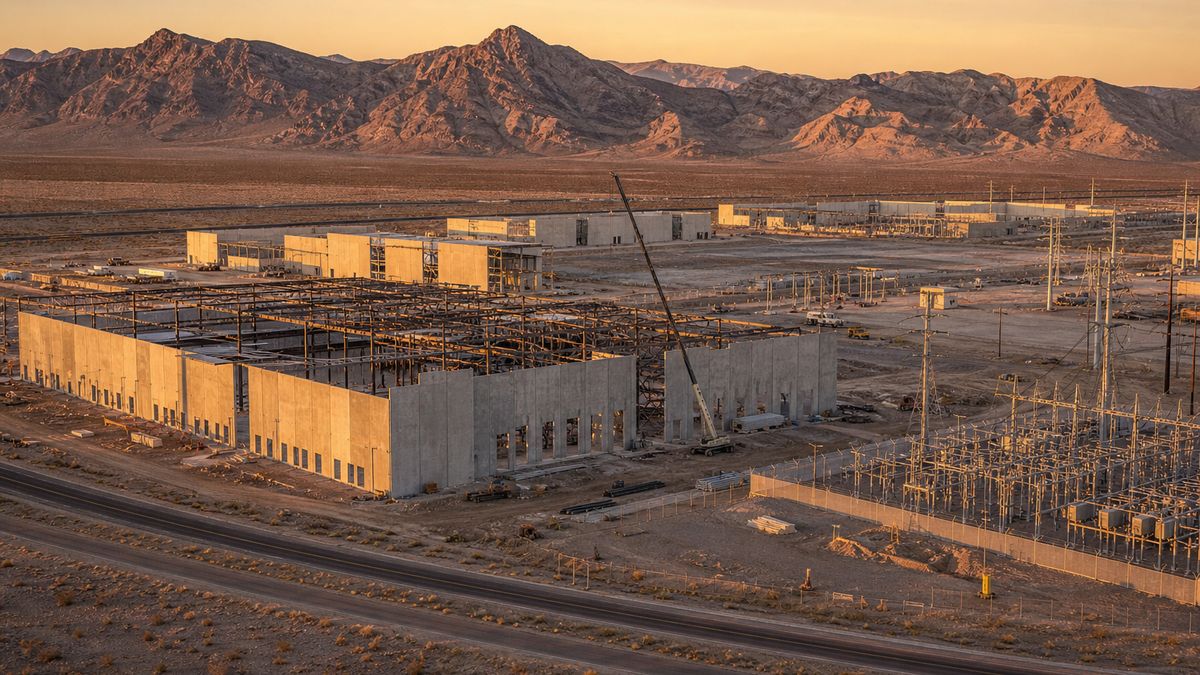
The valley gets the vast majority of its water from Lake Mead. The Southern Nevada Water Authority has made the region a national leader in conservation, but water policy still shapes which uses get approved and how. Water-intensive projects, from data centers to large landscaped communities, face more scrutiny every year. Our take is in Water Now Decides What Las Vegas Builds and our look at Apex.
3. Gaming money comes with a regulator
If an investment touches gaming, Nevada's regulators want to know who you are. Under NRS 463.643, anyone who acquires more than 5% of a publicly traded gaming company's voting securities must notify the Nevada Gaming Commission, and anyone above 10% must apply for a finding of suitability. Privately held licensees face their own licensing and suitability reviews for owners and key people. These reviews are thorough, take time and look closely at the source of funds. We know the process first-hand: our own casino acquisition has been approved by the parties and is now in gaming commission licensing and background checks.
Gaming licensing isn't a box to check at closing; it's a gating item for the whole timeline. Families that want gaming exposure should plan for a long review, keep their ownership structure clean and documented, and decide early whether they want a licensed position or a passive one that stays below the thresholds. Getting that wrong is the most expensive mistake we see outside capital make here.
Who wins, and who may be disappointed
Likely winners
- Patient capital with local partners. Families that partner with operators who know the entitlement process, the contractors and the utilities move faster and make fewer expensive mistakes.
- Owners of needs-based assets. Housing at attainable price points, senior living, medical space and logistics serve a growing, aging population regardless of the tourism cycle. We explored senior living in Las Vegas Is Getting Older.
- Families that already hold land. In a valley that can't easily grow outward, entitled land near infrastructure tends to gain value over time.
- Operators of businesses that serve the city's events and venues, from mobility to staffing to supply.
Who may be disappointed
- Trophy hunters. Buying a famous name on the Strip is a different business from earning a good return on it, and the big operators set the price.
- Families underwriting the rendering. Districts around stadiums, arenas and downtown projects take years longer than promised. See our analysis of the A's ballpark and downtown Las Vegas.
- Tax-first investors. The tax advantages don't fix a bad basis, a weak operator or a project that can't get water.
- Blind-pool investors who hand money to a sponsor without seeing the deal, the operator or the exit.
Considering your first Las Vegas investment?
We work with family offices and private investors on deal sourcing, structuring, joint ventures and execution, as principals alongside you. Let's talk through what you're looking for.
Where we see opportunity
Needs-based real estate
Housing, senior living, medical office and childcare don't depend on how many visitors fly into Harry Reid International. They depend on how many people live here, how old they are and how sick they get. That demand is local and durable. These assets usually need a skilled operator, which is exactly why partnering matters.
Multifamily at a better basis
Rents are falling and the pipeline is shrinking at the same time. For a family with a long horizon and no need to sell, that combination is often where better entry prices appear. We'd focus on well-located, older assets that can be improved, or on new product bought from developers who need to sell.
Infrastructure-adjacent industrial
The industrial market is recovering from its supply wave, and the long-term drivers, such as distribution to California, manufacturing and data infrastructure, remain intact. The best positions are near power, water and freeway access, which are exactly the things that are hard to create.
Owner-operated hospitality and services
Family offices often overlook operating businesses. In a city that hosts tens of millions of visitors and hundreds of major events every year, companies that provide staffing, logistics, maintenance, food supply and transportation can generate steady cash flow, and they're usually priced far below real estate.
Patient land positions
Land in the path of growth, held with options or in partnership with landowners, can be a strong long-term play, as long as the family is honest about the holding period, carrying costs and water. This is not a two-year trade.
The risks we'd watch
- Tourism cycles: 2025 showed how quickly visitation can fall when travel gets expensive. Anything tied to visitors needs a downside case.
- Water policy: Colorado River negotiations and drought could tighten rules on new development, especially water-intensive uses.
- Land supply: if the lands bill stalls, land costs stay high; if it passes, some land values may adjust as new supply arrives.
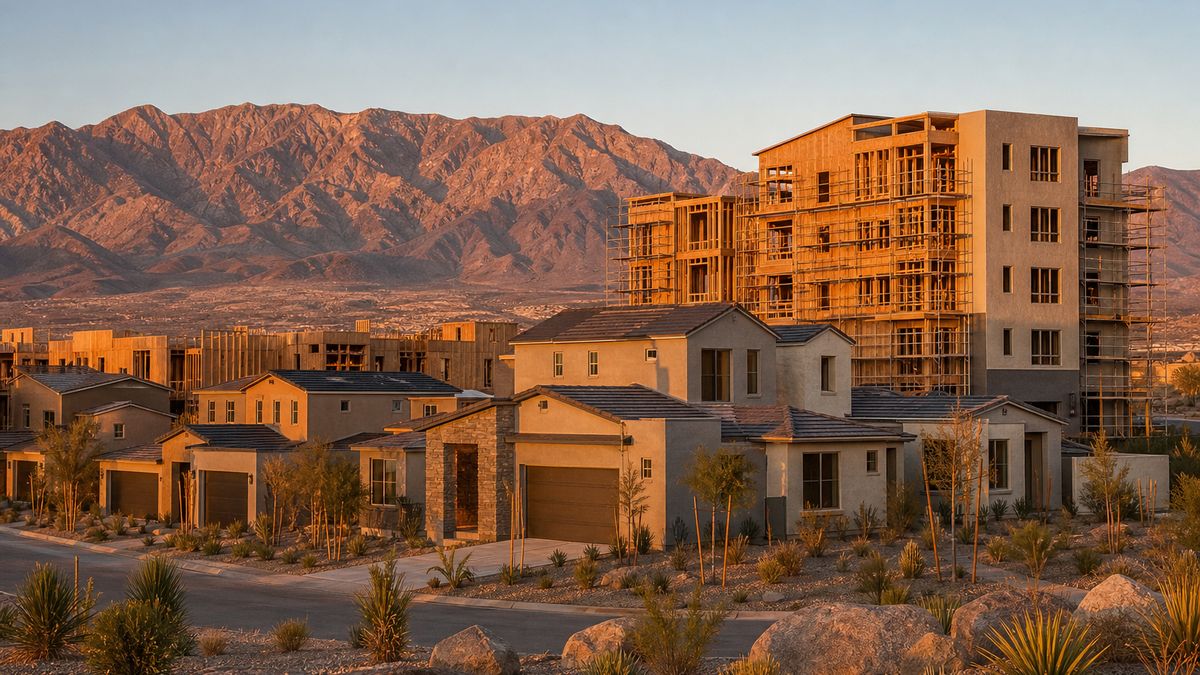
- Construction costs and insurance: labor, tariffs and materials have pushed costs up, and they can wipe out a development margin.
- Multifamily rent softness: rents are still falling. Buying today requires conservative rent assumptions for the next year or two.
- Regulatory timelines: gaming licensing, entitlements and utility connections all take longer than outside investors expect.
- Concentration: Las Vegas still leans heavily on hospitality and gaming. A diversified family portfolio should treat it as one position, not a whole strategy.
How we would approach it
If a family office asked us how to start in Las Vegas, this is the framework we'd use, and the one we use ourselves:
- Separate structure from investment. Decide on Nevada trust situs or residency with your attorneys first. Then evaluate Las Vegas deals as if the tax benefit didn't exist.
- Pick a theme, not a headline. Housing, senior living, industrial, services or land. Each needs a different operator and a different holding period.
- Lead with a local partner. The best deals here are found and executed by people with relationships at the county, the utilities and among contractors and brokers.
- Invest directly or in a joint venture, not in a blind pool. You should see the asset, the operator, the budget and the exit.
- Stage your capital. Use options, phased closings and milestone-based funding so you aren't fully committed before entitlements, water and financing are secured.
- Underwrite the downside first. Model a tourism dip, slower rent growth and longer approvals. If the deal still works, you have something.
- Plan regulatory time. Anything touching gaming, healthcare licensing or major entitlements needs months, sometimes years, built into the plan.
The bottom line
Las Vegas deserves a place on a family office's map. The tax and trust framework is among the best in the country, the population keeps growing, and the region's biggest constraints, land and water, protect the value of well-positioned assets. But the city has a way of humbling capital that arrives with a pitch deck and no local partner. Tourism swings, regulators take their time, and renderings don't pay distributions.
The families that do best here treat Las Vegas the way we do: as a set of specific, operator-driven opportunities, underwritten conservatively and executed by people who know the ground. If that's how you want to invest, we'd be glad to compare notes.
Frequently Asked Questions
Why are family offices interested in investing in Las Vegas?
Does Nevada have a state income tax?
Do I need to buy Las Vegas property to get Nevada's trust benefits?
How long can a Nevada dynasty trust last?
What do family offices need to know about gaming investments in Nevada?
What property types look most attractive in Las Vegas right now?
Is Las Vegas tourism still a risk for investors?
Why is land so expensive in Las Vegas?
Should a family office invest directly or through a fund in Las Vegas?
How does InTooWin work with family offices?
Talk to InTooWin about investing in Las Vegas
Direct principals, not middlemen. We bring local relationships, deal structure and hands-on execution to family offices and private investors.
Sources
- UBS — Global Family Office Report 2026
- FOX5 Las Vegas — Nevada unemployment drops to 4.7% in September (DETR)
- Northmarq — Las Vegas multifamily, Q3 2026
- CBRE — Las Vegas industrial figures, Q3 2026
- Lee & Associates — Las Vegas office market report, Q3 2026
- News 3 Las Vegas — Las Vegas draws nearly 3.1M visitors in September
- Las Vegas Sun — Las Vegas tourism down 7.5% in 2025
- Chambers — Private Wealth 2026: USA, Nevada
- Whittier Trust — The Nevada Advantage
- Nevada Department of Taxation — Commerce Tax
- NRS 463.643 — Gaming: ownership of publicly traded corporations
Related
This article is commentary and opinion based on publicly reported information as of November 2026. It is not investment, legal, tax or financial advice. Tax, trust and gaming rules are summarized at a high level and change over time; consult your own attorneys and tax advisors. Market data and project details may change; verify current information before making decisions. Images are illustrative and are not official project renderings.