
Las Vegas Is Running Out of Land. The Lands Bill Decides What Comes Next.
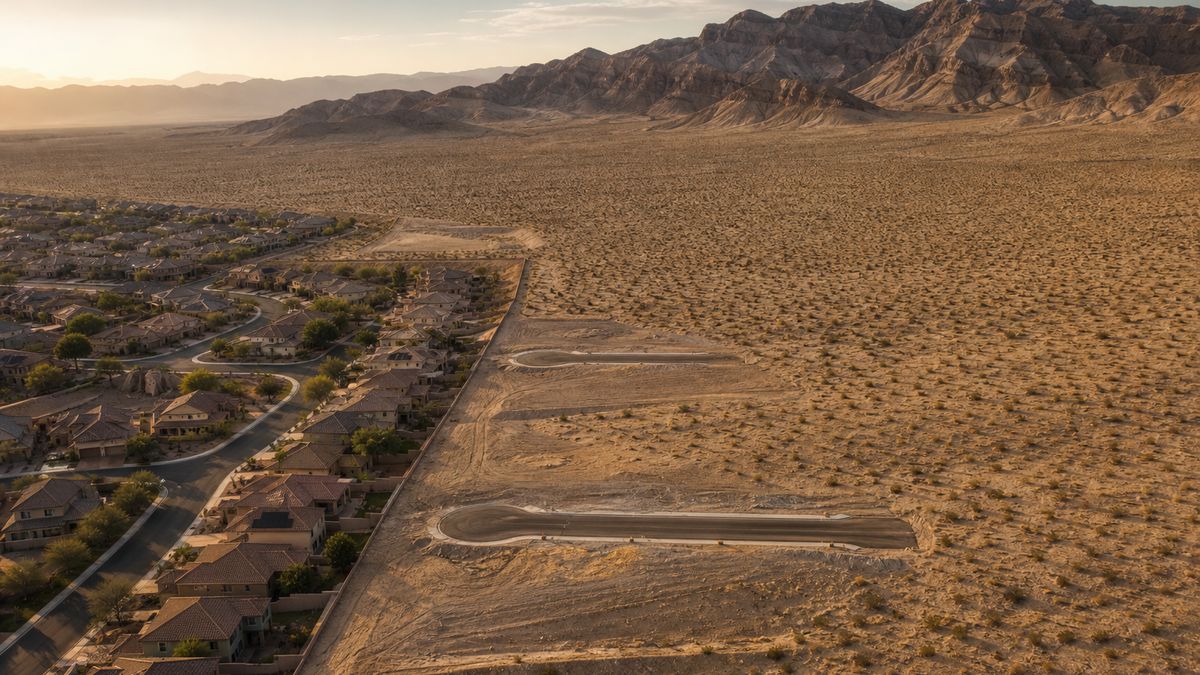
Every growth story we have written about Las Vegas this fall, from the A's ballpark to Apex to Henderson and the southwest valley, eventually runs into the same wall: land. The Southern Nevada lands bill is the piece of federal legislation that would move that wall, and right now it is stuck in a Senate committee with the clock running out on this Congress.
For anyone who owns land, builds homes, finances projects or is thinking about putting capital into the valley, this is not a policy footnote. In a county where roughly 88% of the land is federal, the pace of federal land release sets the pace of almost everything else: home prices, lot costs, where the next master-planned community goes, and which existing landowners hold the most valuable hand.
We have spent our careers building, operating and exiting ventures, including land-heavy projects such as the 320-acre Legacy Sports Complex in Mesa, Arizona, and energy and land development in North Dakota. Here is our take on the land math, what the lands bill would and would not fix, who wins and who may be disappointed, and how we would position today.
Las Vegas is not out of land yet, but it is running out of easy land, and the federal fix is years away even in a good scenario.
- The pool: just over 27,000 acres were left to sell inside the federal disposal boundary at the start of fiscal 2025, according to the BLM. Development has used roughly 2,500 acres a year.
- The price signal: the BLM's April 2026 auction sold 108 acres for $68.65 million, nearly $16 million above appraised value.
- The bill: S. 1005 would let up to 25,000 more acres be added over 50 years. Its last recorded action was a subcommittee hearing in December 2025.
- Likely winners: owners of entitled, serviced land; master-planned developers with runway; infill and redevelopment players.
- Our view: underwrite as if the bill does not pass this Congress. Treat it as upside, not a plan.
The land math nobody can ignore
Start with the map. Clark County covers about 5.1 million acres. Federal agencies control about 88% of it, according to an analysis by the Nevada Policy research group, and Nevada has the highest federal land share of any state. The Bureau of Land Management alone administers about 2.9 million acres, or 57% of the county, per Clark County's own figures.
Since 1998, growth has run through one channel: the Southern Nevada Public Land Management Act (SNPLMA). It drew a disposal boundary around the valley, covering about 6.3% of the county, and pre-authorized the BLM to sell land inside it, usually after a local government nominates parcels. That system turned federal desert into much of the valley you see today.
| Item | What we know |
|---|---|
| Clark County land area | About 5.1 million acres; roughly 88% federally controlled |
| SNPLMA disposal boundary | Created in 1998; covers about 6.3% of the county |
| Land left to sell | Just over 27,000 acres at the start of fiscal 2025 (Oct. 1, 2024), per the BLM; nearly 44,000 acres already sold or conveyed |
| Pace of development | About 2,500 acres a year (2017–2024), per Nevada Policy |
| Where the money goes | 85% to a federal account for Nevada conservation and public projects, 10% to the Southern Nevada Water Authority, 5% to Nevada education; over $4 billion raised since 1998 |
| Lands bill (S. 1005 / H.R. 2134) | Introduced March 2025; would allow up to 25,000 more acres over 50 years; subcommittee hearing Dec. 2, 2025; no vote in either chamber |
| Habitat permit (MSHCP) | 145,000-acre development cap, about 88% used by Sept. 2024; cap raised to 167,650 acres in March 2026; amendment proposes 215,000 acres and a higher per-acre fee |
Divide 27,000 acres by 2,500 acres a year and you get roughly a decade, which is where the "running out of land" headlines come from. That simple math overstates the cliff in some ways and understates it in others. Not every acre in the pool is developable, some has been reserved for affordable housing or public uses, and developers have private land and infill sites to work through. Estimates of developable private land range widely: Regional Transportation Commission research points to about 70,000 developable acres countywide, while state-commissioned RCG Economics work with stricter filters finds about 23,000 privately owned, developable acres.
The honest answer is that nobody knows the exact runway. But every credible estimate points the same way: the supply of cheap, flat, serviceable land is shrinking faster than the region is growing. Researchers expect around 380,000 new residents in Southern Nevada over the next decade, according to Nevada Policy.
The debate over whether Las Vegas has 6 years or 12 years of land left misses the point. Markets price scarcity long before the last acre sells. The scarcity premium is already showing up in land auctions, and it will keep rising until there is a credible, scheduled pipeline of new land. There is not one today.
What land is actually selling for
The clearest evidence of scarcity is the BLM's own auction results. The BLM's competitive online sale in April 2026 sold 13 parcels totaling 108 acres for $68,654,000, nearly $16 million above fair market value, according to the agency's May 1, 2026 release. That works out to a simple average of roughly $636,000 per acre.
Compare that with earlier SNPLMA auctions, as compiled from BLM results releases:
| Sale | Acres sold | Proceeds | Simple average per acre |
|---|---|---|---|
| August 2019 auction | ~665 | $171.2 million | ~$257,000 |
| May 2022 auction | ~376 | $138.6 million | ~$368,000 |
| March 2025 auction | ~42 | $16.6 million | ~$396,000 |
| April 2026 auction | ~108 | $68.7 million | ~$636,000 |
| Monument Hills direct sale (Aug./Sept. 2026) | ~940 | $94 million | ~$100,000 |
Averages hide a lot: parcel size, location, zoning and infrastructure all drive price, and the Monument Hills figure reflects a large, raw, edge-of-valley tract sold to a city rather than a small serviced parcel at auction. But the direction is hard to miss. Fewer acres are being offered, and bidders are paying well above appraisals for what is offered.
Monument Hills: the template for the next decade
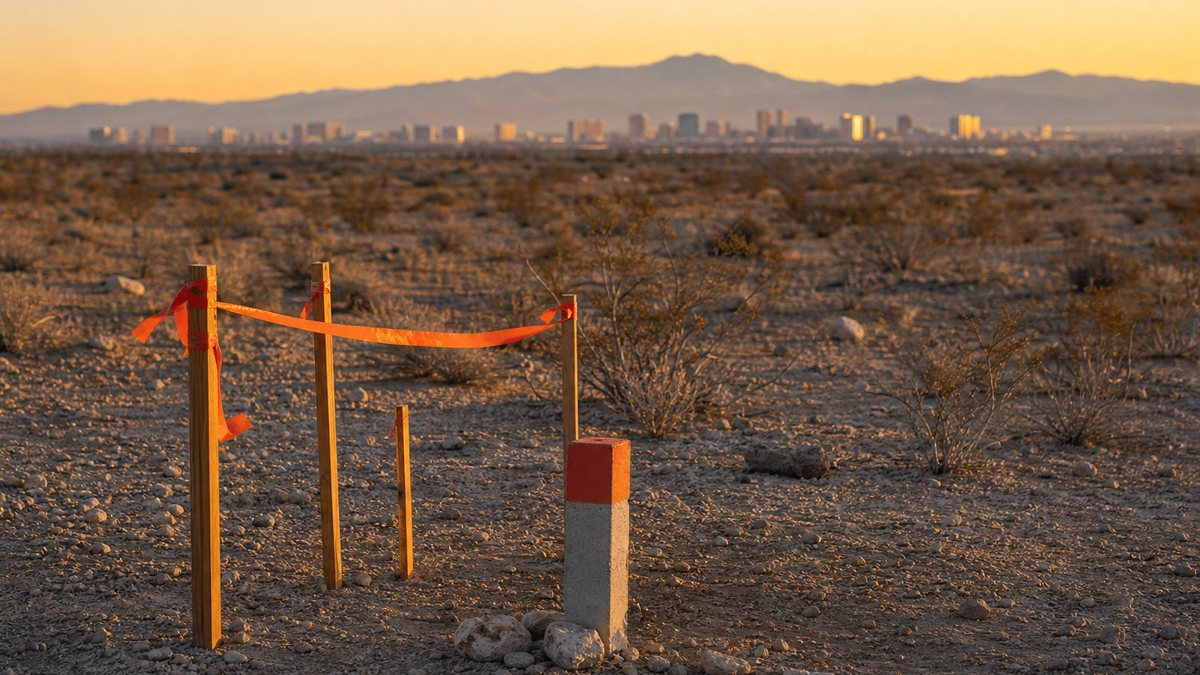
The biggest land deal of 2026 shows how the next wave of growth may happen. In late August, the City of Las Vegas acquired about 940 acres of federal land in the far northwest valley and conveyed it to Olympia Companies for the Monument Hills master-planned community. Local reporting puts the price at $94 million. The site sits between Tule Springs Fossil Beds National Monument and the Las Vegas Paiute Tribe's Snow Mountain Reservation.
Plans call for up to 6,000 homes across price points, off-base housing for personnel at Nellis and Creech Air Force Bases, school sites, parks, trails and a community center. The governor's office estimates $3 billion to $4 billion in total economic value and about 1,000 permanent jobs. Mayor Shelley Berkley noted the project took more than a decade of work, and first homes have been reported for around 2028.
Two lessons stand out. First, large tracts still move when local government, the developer and the federal delegation all pull in the same direction. Second, "more than a decade" is the real timeline from idea to conveyance for a big piece of federal land. Anyone counting on new land to relieve prices next year should study that number.
What the lands bill would and wouldn't do
The Southern Nevada Economic Development and Conservation Act (S. 1005, introduced by Sen. Catherine Cortez Masto on March 12, 2025; companion H.R. 2134 introduced by Rep. Susie Lee) is the latest version of a bill Nevada's delegation has pursued for years. In summary, it would:
- Expand the disposal boundary by allowing the Interior Secretary and Clark County to jointly nominate up to 25,000 acres for future sale. Cortez Masto's office describes this as development over the next 50 years.
- Protect more than 2 million acres for conservation and recreation, including wilderness and special management areas.
- Convey land to local governments and tribes, including trust land for the Moapa Band of Paiutes and the Las Vegas Paiute Tribe, and land for public purposes.
- Support affordable housing through land made available to local governments.
Where things stand matters more than what is in the text. The bill was referred to the Senate Energy and Natural Resources Committee, and its public lands subcommittee held a hearing on December 2, 2025. That is the last action on the official record. At the hearing, the Interior Department supported the land conveyances and affordable housing provisions but opposed the wilderness, conservation-area and special-management-area designations, according to its testimony as summarized in public reporting.
History is not encouraging on timing. A 2022 version was pulled from committee after Clark County opposed a compromise that cut developable acreage to 25,000. The 2024 version (S. 4457) cleared committee in November 2024 but never got a floor vote before that Congress ended. The current Congress ends in early January 2027. If S. 1005 does not pass in the lame-duck session, it will have to be reintroduced and start over.
The other land fights that shape the outlook
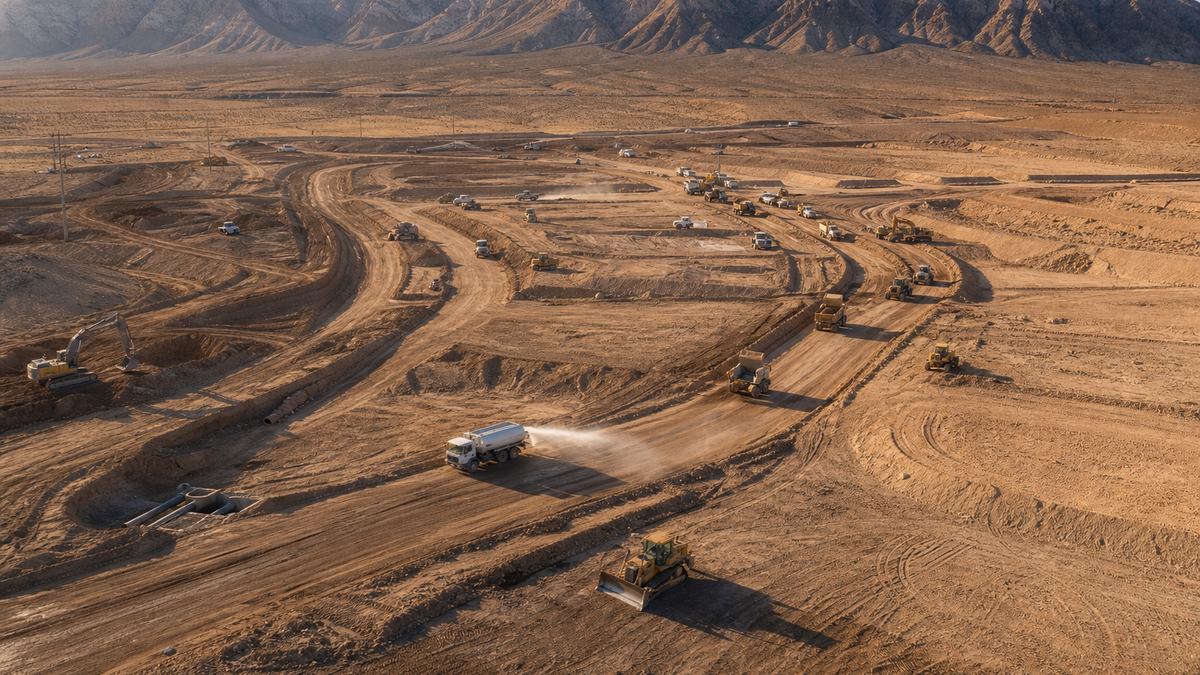
- The 2025 reconciliation fight: in May 2025, Rep. Mark Amodei added an amendment to the House budget bill that would have sold about 450,000 acres of Nevada federal land, including about 65,000 acres in Clark County mostly far from Las Vegas. It was removed on May 21, 2025, after Republican opposition led by Rep. Ryan Zinke. The episode showed how politically radioactive large land sales remain, even in a housing crunch.
- Targeted fixes are passing: Congress approved the Apex Area Technical Corrections Act in June 2025 to give Clark County more control over land around the Apex industrial area, and a Sloan Canyon conservation expansion was signed into law in May 2026. Narrow, local bills move; big package bills stall.
- The habitat permit: Clark County's Multiple Species Habitat Conservation Plan caps how many acres can be developed under its federal endangered-species coverage. The cap was raised to 167,650 acres in March 2026, and a proposed amendment would extend coverage to 215,000 acres over 50 years, with the per-acre development fee rising from $550 to roughly $2,134–$2,294. The current permit ends in January 2031 or when the cap is hit.
We think the lands bill eventually passes in some form, because the housing math and the bipartisan local support are too strong to ignore forever. But "eventually" is the problem. Even after passage, land must be nominated, planned, served with water, power and roads, and covered by the habitat permit. Realistically, new acres from the bill are unlikely to deliver homes in volume before the early 2030s. For anyone investing today, the bill is an option on the next decade, not a fix for this one.
Who wins in a land-constrained valley
1. Owners of entitled, serviced land
The single biggest winner of slow federal release is whoever already holds land that is zoned, mapped and connected to water, sewer, power and roads. Every year of delay adds to the scarcity value of that position. Entitlement and infrastructure, not just acreage, are what the market pays up for.
2. Master-planned developers with runway
Large community developers that already control thousands of acres, including newcomers like Monument Hills, can pace releases to the market and capture rising lot values. They also have the staff and relationships to work the nomination and conveyance process for the next tract.
3. Infill, redevelopment and density
When the edge stops moving, value moves inward. Underused commercial sites, aging strip centers, older industrial parcels and vacant infill lots become more valuable, as do projects that put more homes on less land: townhomes, small-lot single-family and mid-rise multifamily near job centers.
4. Public agencies and partners with land reservations
The BLM has reserved roughly 850 acres in the valley for affordable housing for the state, county and cities, and has used direct sales at nominal prices, such as about 19 acres in Henderson at $100 per acre for affordable housing. Builders and capital partners who can work with public agencies on these sites have access to land that the open market cannot touch.
5. Outlying communities
Demand that can't find land in the valley spills outward. Pahrump and other outlying areas have far more listed land than the valley's core cities, and some buyers will trade commute time for price. That trade only works where water, utilities and roads keep pace.
Holding land, or looking to buy it?
We help landowners, family offices and operators value land positions, structure joint ventures and plan execution in a market where timing is everything. Let's talk through what you're looking at.
Who may be disappointed
- Buyers betting on a quick bill: anyone paying today for land outside the boundary on the assumption that it will be released soon. Bills have stalled repeatedly, and the nomination process after passage adds more years.
- First-time homebuyers: land scarcity feeds directly into lot costs. The median single-family price in the Las Vegas area was $470,000 in September 2026, flat from a year earlier but close to the record $490,000 set in May and June, according to Las Vegas Realtors. Without new land, affordability does not improve much.
- Small and mid-sized builders: they rarely win $600,000-per-acre auctions or decade-long conveyances. Many will be squeezed toward joint ventures, infill or exit.
- Anyone ignoring the cost stack: higher land prices plus a proposed fourfold increase in the habitat development fee plus infrastructure costs can break pro formas that looked fine two years ago.
- Conservation and growth purists on either side: the bill is a bargain between development and protection. Neither camp gets everything it wants, which is exactly why it keeps stalling.
Where we see opportunity
Land partnerships, not just land purchases
Many of the best land positions in the valley belong to long-time owners, families and companies who don't want to sell outright at today's prices. Joint ventures, ground leases and phased takedowns let a developer or investor control land without overpaying upfront, and let the owner share in the upside. Structuring these deals well is where experienced principals earn their keep.
Infill and adaptive reuse
As edge land gets more expensive, the math on redeveloping underused sites inside the valley improves. Older retail and office parcels near transit, job centers and the Strip deserve a second look, especially where zoning allows more density.
Housing products that use less land
Build-to-rent communities, townhomes and small-lot product can deliver more homes per acre at prices closer to what local incomes support. Senior and assisted living, a sector we are directly involved in through a ground-up assisted living development, is another land-efficient use with strong demographic tailwinds.
Infrastructure that unlocks land
Land without water, sewer, power and roads is just desert. Companies and capital that help deliver utilities and site work to new areas, including the far northwest, the southwest and the I-15 corridors, will be busy for years. Our principals' backgrounds in industrial water management, aggregates and site-focused operating businesses taught us that infrastructure is where land value is actually created.
Positioning for the bill without depending on it
Watch the nomination maps and the habitat permit amendment closely. Options and rights of first refusal near the likely expansion areas can be bought cheaply relative to the upside, if they are structured so that nothing is lost if the bill stalls again.

The risks we'd watch
- Political timing: the current Congress ends in early January 2027. If the bill is not passed in the lame-duck session, the process restarts in a new Congress.
- Overpaying at auction: bidding 30% above appraisal only works if the exit price holds. Sales volumes slowed in 2026, and the market was carrying about five months of supply in September.
- Interest rates: rising mortgage rates are already cooling sales, according to Las Vegas Realtors. Land carry costs and construction loans get more expensive at the same time.
- Water and infrastructure: new land is only useful if it can be served. Water policy deserves its own deep dive, and we will cover it next.
- Habitat permit changes: a higher per-acre fee and new conditions under an amended permit will change land budgets. Delays in the amendment could also slow approvals as the current permit nears its limits.
- Tourism cycles: Southern Nevada's job base still leans on hospitality. As we wrote in our tourism reset analysis, a softer visitor economy can cool housing demand even when land is scarce.
How we would approach it
If we were advising a client, or deploying our own capital, in Southern Nevada land today, this is the framework we would use:
- Underwrite without the bill. Assume no new federal acreage reaches the market before the 2030s. Anything sooner is upside.
- Pay for entitlement and infrastructure, not just acreage. A smaller, served, zoned parcel often beats a larger raw one at the same price.
- Prefer control to ownership. Use options, joint ventures, ground leases and phased takedowns to keep capital flexible while policy plays out.
- Budget the full cost stack. Land, habitat fees, utilities, offsite improvements, carry and financing, with sensitivity to higher rates.
- Build for the local buyer. Products that match local incomes, including attached, small-lot, rental and senior housing, are the most resilient in a high-land-cost market.
- Track the signals. Committee action on S. 1005, BLM sale notices in the Federal Register, local government nomination maps and the habitat permit amendment will tell you more than any headline.
The bottom line
Las Vegas grew for three decades on a simple deal: the federal government sold desert inside a line on a map, and developers turned it into neighborhoods. That line is now close to full, and the bill to redraw it has been stuck for years. The result is a valley where land, not demand, sets the pace of growth, and where the scarcity premium shows up at every auction.
That does not make Southern Nevada a worse place to invest. It makes it a place where structure, timing and execution matter more than ever. The winners will be those who control well-served land, partner creatively with landowners and public agencies, and build products local families can afford, while treating the lands bill as an option rather than a promise.
If you own land in the valley, are weighing a purchase, or want a second opinion on a deal, we would be glad to compare notes. See our services or reach out directly.
Frequently Asked Questions
What is the Southern Nevada lands bill?
Has the Clark County lands bill passed?
How much land is left for development in Las Vegas?
Why does the federal government own so much land around Las Vegas?
How much does BLM land sell for in Las Vegas?
What is Monument Hills?
Where does the money from BLM land sales go?
Will the lands bill lower home prices in Las Vegas?
Is it a good time to invest in Las Vegas land?
Does InTooWin work with landowners and land investors?
Talk to InTooWin about your land or next deal
Direct principals, not middlemen. We bring capital relationships, deal structure and hands-on execution to family offices, landowners and operators.
Sources
- Congress.gov — S. 1005, Southern Nevada Economic Development and Conservation Act (text)
- Congress.gov — H.R. 2134 (House companion)
- GovInfo — S. 1005 bill status and actions
- Sen. Cortez Masto — remarks at Dec. 2, 2025 committee hearing
- BLM — Public land sale in Las Vegas Valley nets over $68 million (May 2026)
- News 3 Las Vegas — Federal land sale completed for Monument Hills
- 8 News Now — Advocates react to $94M Monument Hills sale
- Nevada Policy — Southern Nevada's land problem isn't going away
- Nevada Real Estate Group — Las Vegas land supply math (compilation of BLM, MSHCP and congressional records)
- The Nevada Independent — 2022 Clark County lands bill stalls in the Senate
- The Nevada Independent — Amodei land sale amendment (May 2025)
- The Nevada Independent — Nevada land sales removed from budget bill
- News 3 Las Vegas — Apex land bill gets congressional approval
- News 3 Las Vegas — September 2026 Las Vegas home sales (Las Vegas Realtors data)
Related
This article is commentary and opinion based on publicly reported information as of October 2026. It is not investment, legal or financial advice. Legislation, land sales, prices and timelines may change; verify current information before making decisions. Images are illustrative and are not official renderings or photos of any specific project or parcel.