
Apex Is Becoming Las Vegas' Data Center Frontier. Water and Power Will Decide Who Wins.
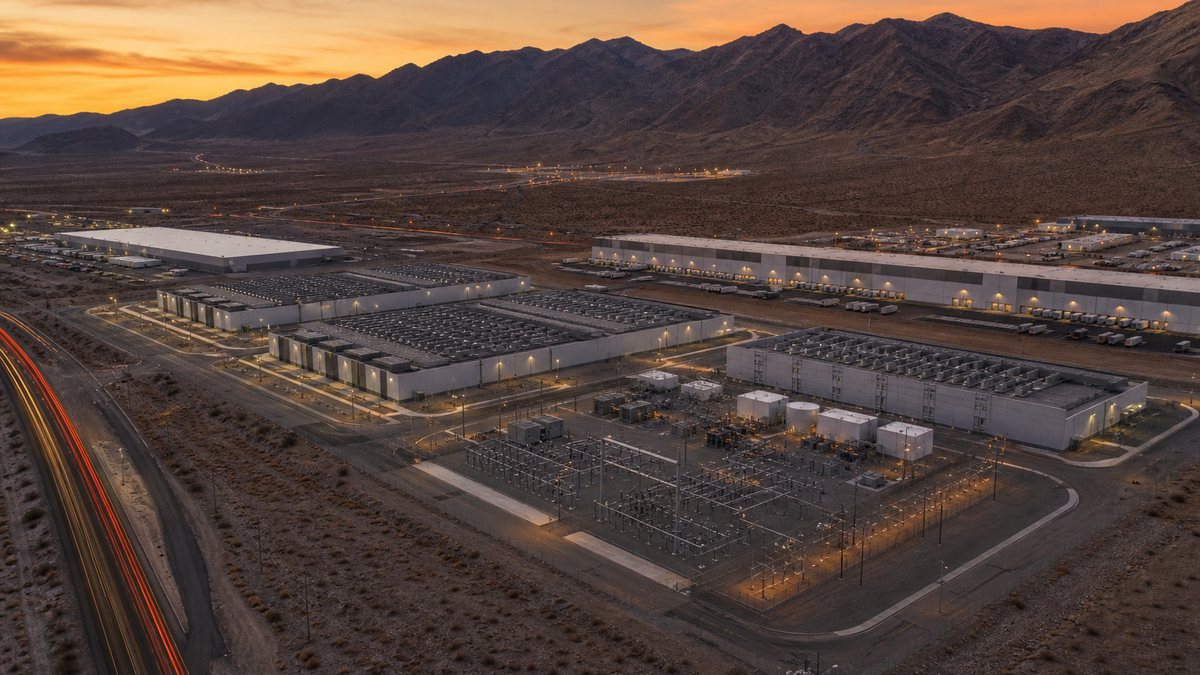
For decades, Apex Industrial Park in North Las Vegas was the place where big plans went to wait. The land was cheap, the location on Interstate 15 was right, and the zoning was industrial. What it didn't have was water, sewer or enough power. That is changing quickly. A public water and wastewater system is under construction, logistics giants have built or bought in, and in 2026 the data center industry has been buying Apex land in large blocks.
Most of the coverage treats Apex as a jobs story or a real estate story. We think it is really an infrastructure story: the winners will be the people who understand where the water, the sewer lines, the substations and the transmission capacity land, and when. Our principals have spent their careers in businesses where infrastructure decides everything, including industrial water management, oilfield waste disposal and aggregate supply. Below is our take on what is happening at Apex, who stands to win, who may be disappointed, and how we would approach it.
Apex has moved from "someday" to "now," but the pace of the next phase depends on utilities, not on demand.
- The place: about 18,000 acres north of Las Vegas along I-15 and US 93, with roughly 5,000 developable acres, according to the City of North Las Vegas.
- The unlock: a Southern Nevada Water Authority and North Las Vegas water and wastewater system, with $227 million in construction contracts approved in 2025, designed to deliver 20 million gallons a day.
- The new buyers: data center operators. Switch has bought hundreds of acres at Apex in 2026, and Novva paid a reported $181 million for about 205 acres in 2025.
- The constraint: power. NV Energy reports roughly 22,000 MW of data center interest statewide, close to three times the utilities' combined 2025 peak.
- Our view: the best risk-adjusted plays sit one step away from the data center itself: utilities-ready land, construction supply, water technology and the services a growing industrial workforce needs.
What is actually happening at Apex
Start with the facts. According to the City of North Las Vegas, public utility records and reporting by the Las Vegas Review-Journal, Data Center Dynamics and local TV outlets:
| Item | What we know |
|---|---|
| Size | About 18,000 acres, with about 5,000 developable acres (City of North Las Vegas) |
| Access | Interstate 15, the US 93 / I-11 corridor and Union Pacific rail |
| Industrial space | About 28.5 million sq ft completed, under construction or planned, per the city |
| Operating users | The city lists a Kroger distribution center (about 988,000 sq ft) and Air Liquide's liquid hydrogen plant among open operations |
| Developers | Prologis (879 acres), Hopewell, Dermody, CapRock, VanTrust, Moonwater and others, per the city |
| Water and sewer | Garnet Valley water and wastewater systems; SNWA approved $227 million in contracts in May 2025; designed for 20 million gallons per day, with wastewater recycled and returned to Lake Mead |
| Power | NV Energy has two existing substations serving the area and plans five more, per the city |
| Data center land | Novva: about 205 acres for $181 million (August 2025). Switch: 176 acres for $85.5 million (January 2026), 140 acres for about $95 million, and another 176 acres for about $196 million (reported September 2026) |
| Long-term projection | About 73,000 jobs and $7 billion in investment at full build-out over roughly 20 years (City of North Las Vegas) |
Two things stand out. First, the land market has repriced. Per-acre prices in the reported Switch deals rose sharply between January and September 2026, and Novva paid well above the earlier Switch price per acre. Second, none of these data center buyers has announced a full campus plan, megawatt figures or opening dates for its Apex land. They are buying optionality: a place to build when the power and the customer contracts line up.
When the best-capitalized operators in the region buy land years ahead of announced projects, they are telling you where they expect the utilities to arrive. That is a useful signal. It is not the same as a guarantee that every parcel at Apex will be served on the same schedule.
Why data centers want Apex
Data centers need four things: large, flat parcels; power; fiber; and a permitting environment that will say yes. Apex offers more of the first and last than almost anywhere else in Southern Nevada.
- Scale: the valley floor is largely built out and bordered by federal land. Few other places in Clark County can offer contiguous blocks of 100 to 200 acres zoned for industrial use.
- Distance from neighbors: the backlash against data centers in the southwest valley and Henderson has been about noise, water and power near homes. Apex sits away from residential neighborhoods.
- A willing city: North Las Vegas has made Apex a centerpiece of its economic strategy and partnered with SNWA on the water and sewer build-out.
- Proximity to existing clusters: Switch already operates more than 2 million square feet of data center space in the southwest valley, and Novva operates an existing North Las Vegas facility. Apex is an extension of an established market, not a bet on a new one.
The timing matters too. Southern Nevada's political mood on data centers has shifted in 2026. Henderson considered a 180-day moratorium on new data center applications before choosing in July to require stricter, project-specific development agreements covering water, power and noise instead. Clark County commissioners have discussed whether a countywide data center ordinance is needed. A recent Review-Journal poll reported that 57% of Nevadans oppose new data centers. In that environment, a remote industrial park with a supportive city government looks even more attractive to operators.
The water question: less scary than it looks, but not free
Mention data centers in the desert and the first question is water. It is a fair question, but the details matter.
Southern Nevada moved early. The Southern Nevada Water Authority paused traditional evaporative cooling for new development in 2021, and new data centers, hotels and industrial buildings must comply, according to SNWA. That is why the newer facilities in the valley use closed-loop or dry cooling. Novva's North Las Vegas facility used about 551,000 gallons in 2025 by SNWA's figures, and Switch says its latest approved expansion will use less than 1,000 gallons of public water a day, mostly for restrooms and sinks. By contrast, Google's Henderson campus, which predates the rules and uses evaporative cooling, used more than 404 million gallons in 2025 according to city records reported by KTNV.
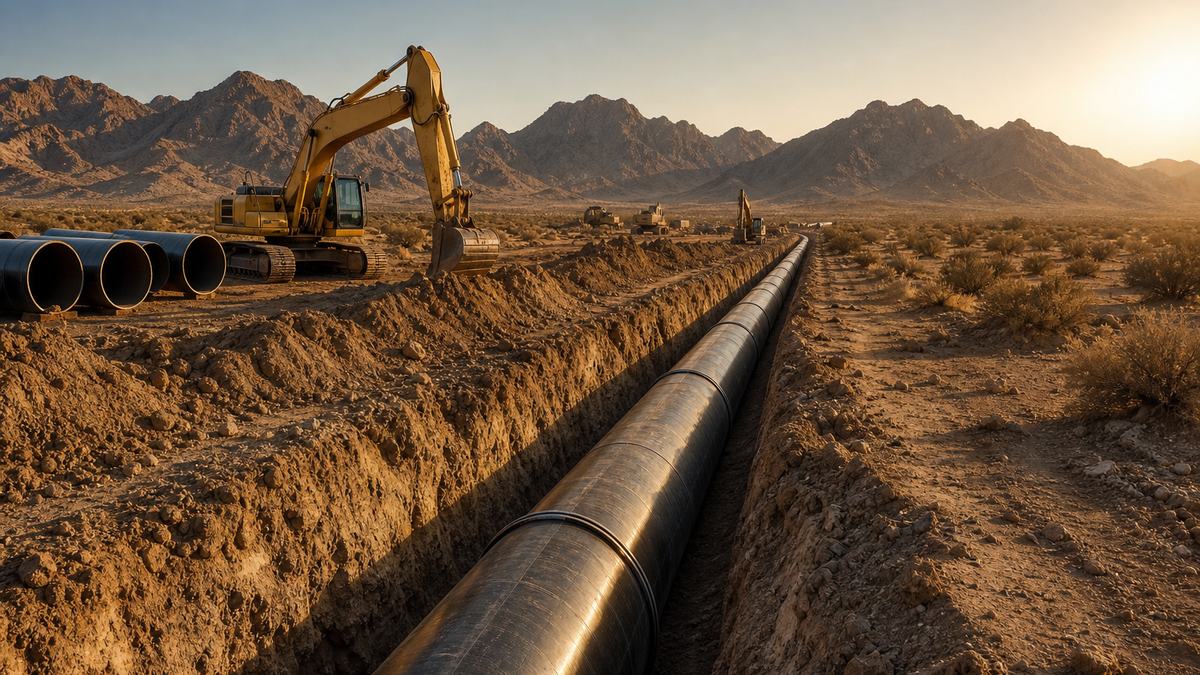
The bigger water issue at Apex is not cooling. It is basic service. Until the Garnet Valley system is finished, many parcels simply can't get the water and sewer capacity they need for any large user. The system is designed to supply 20 million gallons a day and to capture, treat and return wastewater to Lake Mead. That design is a smart one for a desert region, but capacity is finite and will be allocated over time.
There is also an indirect water cost. Researchers at the Desert Research Institute have pointed out that the water used to generate electricity for data centers can exceed the water used on site. In other words, a dry-cooled data center still has a water footprint upstream, at the power plant.
Water will not stop data centers at Apex. Southern Nevada's rules already push operators toward closed-loop and dry cooling. What water will do is sequence development: parcels on the first phases of the pipe and sewer network will be worth far more, far sooner, than parcels at the end of the line.
The power question: the real bottleneck
If water decides the order of development at Apex, power decides the pace.
NV Energy's 2026 Integrated Resource Plan reports roughly 22,000 MW of interest from data center developers, with formal requests from 39 prospective customers totaling about 16,930 MW, according to RCG Economics' summary of the filing. For context, the combined peak of NV Energy's two utilities in 2025 was close to 8,250 MW. The utility projects data centers could grow from about 5% of its retail sales today to as much as 64% by 2046.
Here is the part most Las Vegas observers miss: about 84% of the roughly 6 GW of interconnection agreements NV Energy has signed are with large-load customers in Northern Nevada, around Reno and the Tahoe-Reno Industrial Center. Southern Nevada is earlier in the queue.
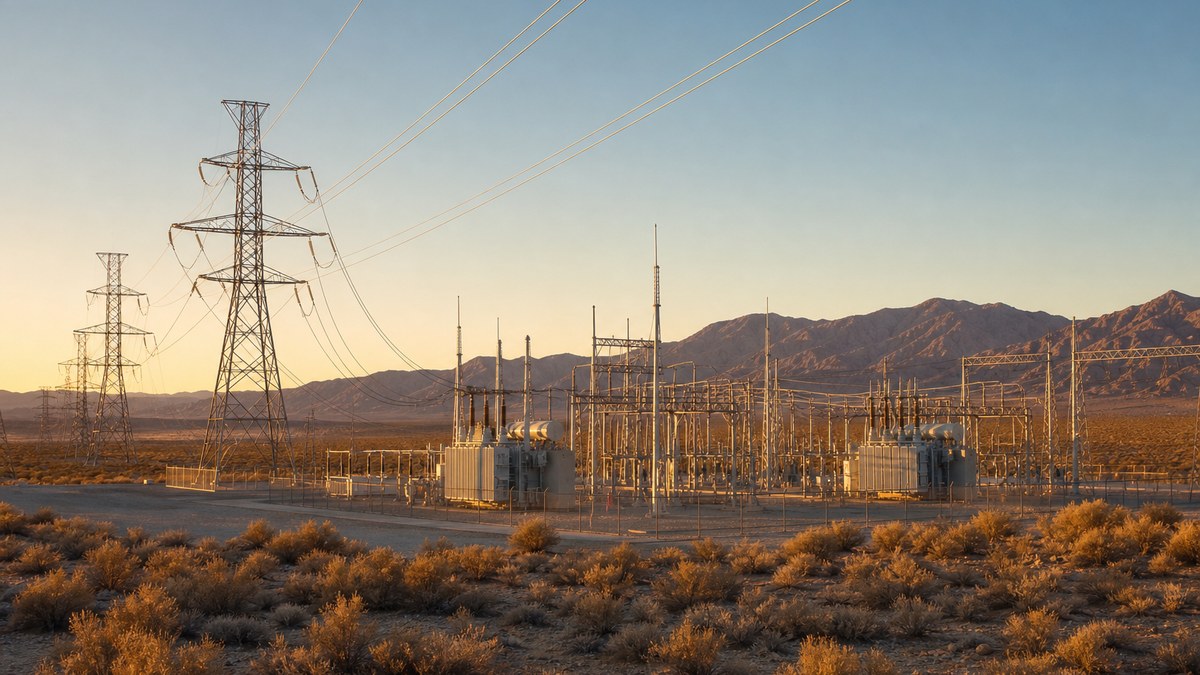
The transmission backbone is still being built. NV Energy's Greenlink West, a roughly 350-mile, 525 kV line from Las Vegas toward Yerington, is expected to come online after summer 2027. Greenlink North is targeted for late 2028. These lines are designed to move power across the state, and they will shape how quickly new large loads anywhere in Nevada can be served.
Power is also becoming a political issue. Ratepayer advocates, the Sierra Club and local residents have raised concerns about who pays for new generation and transmission. NV Energy's latest plan leans on new solar, large battery storage and some new natural gas capacity. Expect every large data center interconnection in Southern Nevada to face more questions about cost allocation than it would have two years ago.
| Scenario | What it looks like | What it means for investors |
|---|---|---|
| Fast build | Garnet Valley service reaches most of Apex on schedule; NV Energy adds substations quickly and signs Southern Nevada data center loads | Strong land appreciation near utilities; heavy demand for construction, supply and housing in North Las Vegas |
| Phased build (our base case) | Data centers build in stages as power is approved; logistics and manufacturing fill in around them | Clear winners near early infrastructure; patient capital rewarded; service and supply businesses outperform land speculation |
| Stalled build | Power cost fights, tighter rules or a cooling AI market slow commitments | Data center land becomes a long hold; logistics and industrial users carry the park; values flatten away from utilities |
Who wins: our ranking
1. Owners of utilities-ready land
The most valuable acres at Apex are not the ones with the best freeway frontage. They are the ones with water, sewer and power capacity committed. Owners who can show a buyer a clear path to service will command the premium.
2. Construction, materials and site work
Every data center, warehouse and substation needs grading, aggregate, concrete, steel, electrical work and heavy equipment. In Northern Nevada, roughly 4,000 electricians are working, about 80% of them on data center sites, according to RCG Economics. A similar dynamic in Southern Nevada would reward contractors, suppliers and workforce providers. At Apex, at least one industrial project has been built on land blasted out of a mountainside, according to the Review-Journal, a reminder that site preparation is a business in its own right.
3. Water and energy technology providers
Closed-loop cooling, water recycling, on-site generation, battery storage and efficiency systems all become more valuable when water and power are the scarce inputs. This is where operators and technology companies will compete hardest for an edge.
4. North Las Vegas services and housing
Large industrial parks pull workers, and workers need homes, food, childcare, fuel and services. The northern valley is the closest place for many Apex workers to live, which supports demand for build-to-rent housing, neighborhood retail and service businesses in the region.
5. The City of North Las Vegas
The city has bet on Apex for years. If the build-out continues, it gains a tax base that funds public safety, parks and roads, according to the city. That is a meaningful shift for a community that has historically been more residential than industrial.
Looking at land or a business tied to Apex?
We help investors, landowners and operators pressure-test infrastructure assumptions, structure partnerships and plan execution. Let's talk through what you're looking at.
Who may be disappointed
- Buyers paying data center prices for land without a utility path: recent deals set a high bar. Not every parcel will be served soon, and land without water, sewer and power commitments is still raw land.
- Investors expecting quick data center announcements: operators are banking land for the long term. Some of these sites may sit for years.
- Speculative warehouse developers: CBRE reported Las Vegas industrial vacancy around 9% in the second quarter of 2026, with higher vacancy concentrated in Apex and North Las Vegas as new buildings delivered. Leasing has slowed from its peak. New speculative space faces a more competitive market.
- Ratepayers, if costs aren't allocated carefully: large new loads require new generation and transmission. How those costs are shared is one of the most important policy debates in Nevada right now.
Where we see opportunity
Infrastructure-adjacent land, held patiently
Land near committed infrastructure, bought at a price that works as an industrial or logistics site even if a data center never arrives. That is the key test: the investment should make sense without the data center premium.
Site preparation and aggregate
Grading, blasting, aggregate supply and heavy civil work are steady, contract-driven businesses that grow with any kind of industrial development at Apex, not just data centers. One of the ventures our principals built and exited, Kota, was in aggregate supply. We know how much of a project's early cost and schedule depends on these businesses.
Water treatment and reuse
Industrial users in the desert will keep paying for systems that cut water use, recycle wastewater and recover value from it. Our principals were involved in building Bullrock Water, an industrial water management business, and our current agricultural infrastructure joint venture, Project Flintstone, works with Livestock Water & Energy's water treatment technology. We think water technology is one of the most underrated angles in the Southern Nevada data center story.
Power and energy services
On-site generation, battery storage, electrical contracting and maintenance are all needed regardless of which operator wins the next deal. Companies that serve multiple sites and multiple customers are best placed.
Workforce housing and services in the northern valley
The most overlooked opportunity is often 15 to 20 minutes away from the industrial park itself: rental housing, retail, food and services for the people who build and run it.

The risks we'd watch
- Power timing and cost: the biggest variable. Watch NV Energy's resource plan decisions, new Apex substations and how interconnection costs are allocated.
- Utility sequencing: which parts of Apex receive water and sewer service first, and how capacity is allocated among users.
- Regulation: Henderson's development agreement approach and Clark County's ordinance discussions show that rules are tightening across the valley. North Las Vegas has been supportive, but that can change with leadership and public sentiment.
- Public opinion: polling shows a majority of Nevadans uneasy about new data centers. Ballot questions, such as Boulder City's 2026 question, and legislation in 2027 could change the ground rules.
- The AI cycle: data center demand has been driven by AI investment. If that spending slows, land banked for data centers could take much longer to develop.
- Industrial vacancy: new warehouse supply at Apex has outpaced leasing in some quarters. Rents and absorption matter more than headlines.
How we would approach it
If we were advising a client, or deploying our own capital, at or around Apex today, this is the framework we would use:
- Map the utilities before the parcels. Start with water and sewer phasing, substation plans and transmission timing. Then look for land.
- Underwrite without the data center premium. The deal should work as industrial or logistics land. Treat a data center buyer as upside.
- Favor businesses that serve every user. Site work, aggregate, water, power and services win whether the tenant is a data center, a distributor or a manufacturer.
- Stage your commitments. Use options, phased purchases and joint ventures to keep flexibility while power and policy questions are settled.
- Partner with operators who already have relationships. Utility, contractor and municipal relationships are what move projects forward in Nevada.
- Watch the milestones. Garnet Valley completion, new NV Energy substations, Greenlink West energization in 2027, Clark County data center rules and the 2027 legislative session.
The bottom line
Apex is no longer a "someday" industrial park. Water and sewer lines are being built, logistics companies are operating, and the region's biggest data center operators have bought land in large blocks. But the next decade at Apex will be paced by utilities and politics, not by demand. Water will decide the order in which land comes online. Power will decide how fast. Public opinion will decide how much friction every project faces along the way.
The people who do best here will be the ones who understand infrastructure, structure deals that survive delays, and partner with operators who know how to execute. That is the work we enjoy. If you're weighing an opportunity tied to Apex, North Las Vegas or Southern Nevada's industrial growth, we'd be glad to compare notes.
Frequently Asked Questions
Where is Apex Industrial Park?
Which data center companies have bought land at Apex?
Will data centers at Apex use a lot of water?
When will the Apex water system be finished?
Does Nevada have enough power for new data centers?
Is there a data center moratorium in Southern Nevada?
Who benefits most from the Apex build-out?
What are the biggest risks of investing near Apex?
Is now a good time to buy land at Apex?
Does InTooWin work on industrial and infrastructure projects?
Talk to InTooWin about your next deal
Direct principals, not middlemen. We bring capital relationships, deal structure and hands-on execution. See our services or reach out directly.
Sources
- City of North Las Vegas — Apex Industrial Park overview
- City of North Las Vegas — SNWA awards $227 million in Garnet Valley infrastructure contracts
- Granite Construction — Garnet Valley wastewater system project
- Data Center Dynamics — Switch buys 176 acres at Apex (January 2026)
- Las Vegas Review-Journal — Switch buys 140 acres at Apex for $95 million
- FOX5 Las Vegas — Switch buys more land at Apex (September 2026)
- Data Center Dynamics — Novva buys 205 acres in North Las Vegas
- RCG Economics — Nevada's data-center boom is outrunning its power grid
- Northern Nevada Business Weekly — Greenlink West expected online in 2027
- KTNV — Why data centers use so much water in Southern Nevada
- Las Vegas Sun — Switch wins Las Vegas expansion approval
- The Nevada Independent — Henderson considers data center pause
- News 3 Las Vegas — Henderson revises data center rules instead of moratorium
- Las Vegas Review-Journal — 57% of Nevadans oppose new data centers
- CBRE — Las Vegas industrial figures, Q2 2026
- Las Vegas Review-Journal — Apex industrial project cut from a mountain
- FOX5 Las Vegas — State of the City highlights Apex growth
Related
This article is commentary and opinion based on publicly reported information as of October 2026. It is not investment, legal or financial advice. Project details, land prices, utility plans and timelines may change; verify current information before making decisions. Images are AI-generated illustrations, not official renderings or photos of Apex Industrial Park or any company's facilities.