
Lake Mead Is Falling. Water Now Decides What Las Vegas Builds.
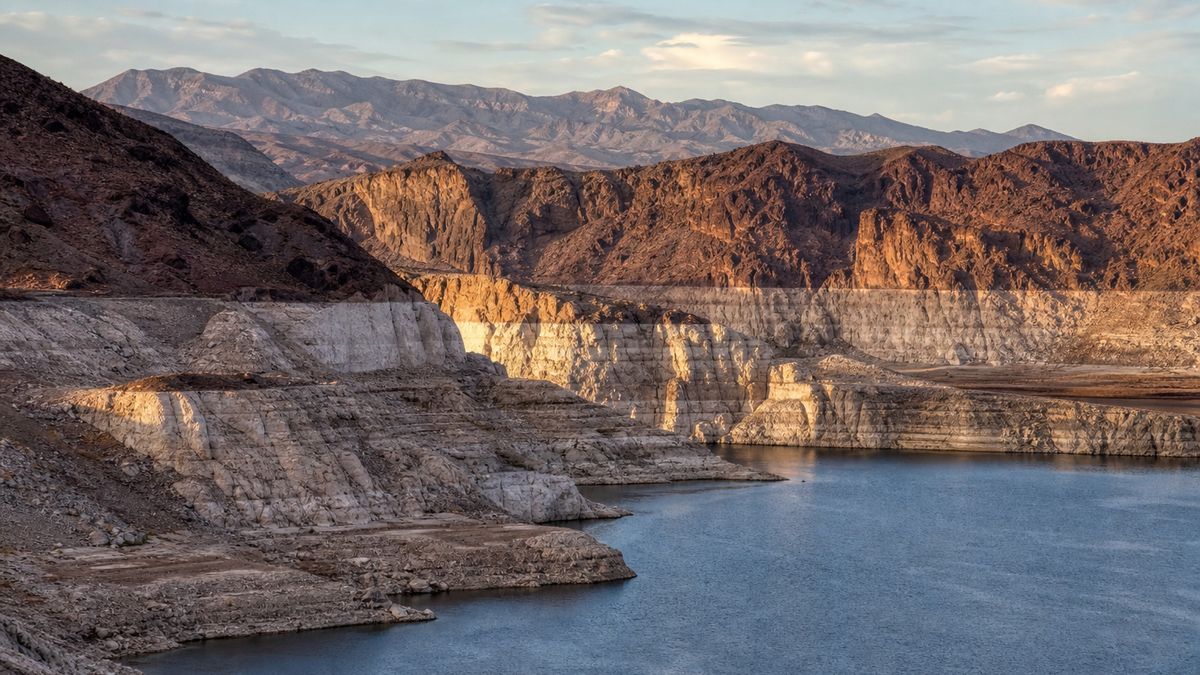
Lake Mead water levels are back near the lows that made national headlines in 2022, and for the first time in the history of the Colorado River, the federal government has imposed a long-term operating plan that none of the Lower Basin states signed. Nevada has sued over it. Arizona has asked to join the lawsuit. And Southern Nevada, which gets most of its water from a single reservoir, is about to be told it can use 50,000 fewer acre-feet a year starting in 2027.
The easy headline is "Las Vegas is running out of water." It's also the wrong one. Southern Nevada has spent two decades cutting its use, building infrastructure that reaches the bottom of the lake, and banking water for exactly this kind of moment. The better question for anyone with capital, land or a business plan in the valley is this: how do Lake Mead and SNWA policy change what can be built, where, and by whom?
In our last insight on the Southern Nevada lands bill, we said water would be the next constraint we covered. Here is our take, written as principal investors who have built, operated and exited an industrial water management business and who look at every Las Vegas deal through the lens of what it consumes.
Water will not stop Las Vegas from growing. It will decide what kind of growth gets approved, financed and rewarded.
- The facts: Lake Mead sat around 1,037 feet in mid-October 2026, and federal projections show it falling further into 2027. New federal rules cut Nevada from 300,000 to 250,000 acre-feet for 2027.
- The fight: Nevada, its Colorado River Commission and the Southern Nevada Water Authority (SNWA) sued the Interior Department in August. Arizona moved to intervene in October.
- The cushion: per-person use in the SNWA service area fell from 211 to 89 gallons a day between 2002 and 2025, indoor water is recycled back to the lake, and SNWA reports more than 2.2 million acre-feet banked.
- The real constraint: consumptive use, meaning outdoor irrigation, evaporative cooling and anything else that doesn't come back down the drain.
- Our view: favor water-light, indoor-heavy, dense projects, and treat water-hungry concepts as a policy risk, not just an engineering line item.
Where things stand right now
The Colorado River rules that governed Lake Mead since 2007 expire at the end of 2026. The seven basin states spent years trying to negotiate a replacement and missed federal deadlines. In August 2026, the Interior Department acted on its own. According to Interior and public reporting:
| Item | What we know |
|---|---|
| Nevada's allocation | 300,000 acre-feet a year under the Law of the River, under 2% of the river's total. SNWA's share is about 276,000 acre-feet. |
| Federal decision | Record of Decision and 2027–2028 Operating Guidelines issued August 21, 2026, inside a 10-year framework through 2036, with new guidelines every two years. |
| 2027–2028 cuts | Lower Basin use reduced by 1.25 million acre-feet a year: Arizona about 760,000, California about 440,000, Nevada 50,000 (to 250,000 acre-feet). At least 700,000 more acre-feet of conservation required over the two years. |
| Litigation | Nevada, the Colorado River Commission of Nevada and SNWA sued in U.S. District Court in Nevada on August 24, 2026. Arizona filed to intervene in mid-October. |
| Lake Mead elevation | About 1,037 feet in mid-October 2026; Reclamation's October 24-Month Study projections, as summarized by analysts, point to roughly 1,008 feet by July 2027. |
| Downside scenario | Reporting on the lawsuit notes Nevada's 300,000 acre-foot entitlement could be cut by more than 213,000 acre-feet, about 71%, if conditions worsen. |
| Hoover Dam power | Nevada receives about 24% of Hoover's energy. Generating capacity was projected to fall from about 1,190 MW in September 2026 to about 317 MW by April 2027. |
Two things stand out. First, the 50,000 acre-foot cut for 2027 is real but manageable for Southern Nevada, which has spent two decades conserving and banking water for exactly this scenario. Second, the range of outcomes has widened. The federal framework allows much deeper reductions if the reservoirs keep falling, and the legal fight means nobody can say with confidence what the rules will be in 2029.
The 2027 cut is not the story. The story is that the river is now governed by a contested federal plan with wide "sideboards." For investors, that turns water from a background assumption into a variable you have to underwrite, the same way you'd underwrite interest rates or entitlement risk.
Why Las Vegas is better positioned than the headlines suggest
It's worth being precise about why Southern Nevada isn't in the same position as a farm district in Arizona or a city that depends on groundwater it can't replace.
1. Indoor water comes back
SNWA says about 45% of the water used in its service area becomes highly treated wastewater, and about 99% of that is recycled. Most of it flows back to Lake Mead through the Las Vegas Wash, and Nevada earns return-flow credits for it. In practical terms, water used indoors, in a hotel shower, an apartment kitchen or a hospital, is largely reused. Water sprayed on grass or evaporated off a cooling tower is gone.
2. Use per person has collapsed
According to The Nevada Independent, per-capita use in the SNWA service area fell from 211 gallons per person per day in 2002 to 89 in 2025, a decline of nearly 58%. Over roughly the same period, SNWA reports, the population it serves grew by about 829,000 people. The board's goal is 86 gallons per person per day by 2035.
3. The straw reaches the bottom
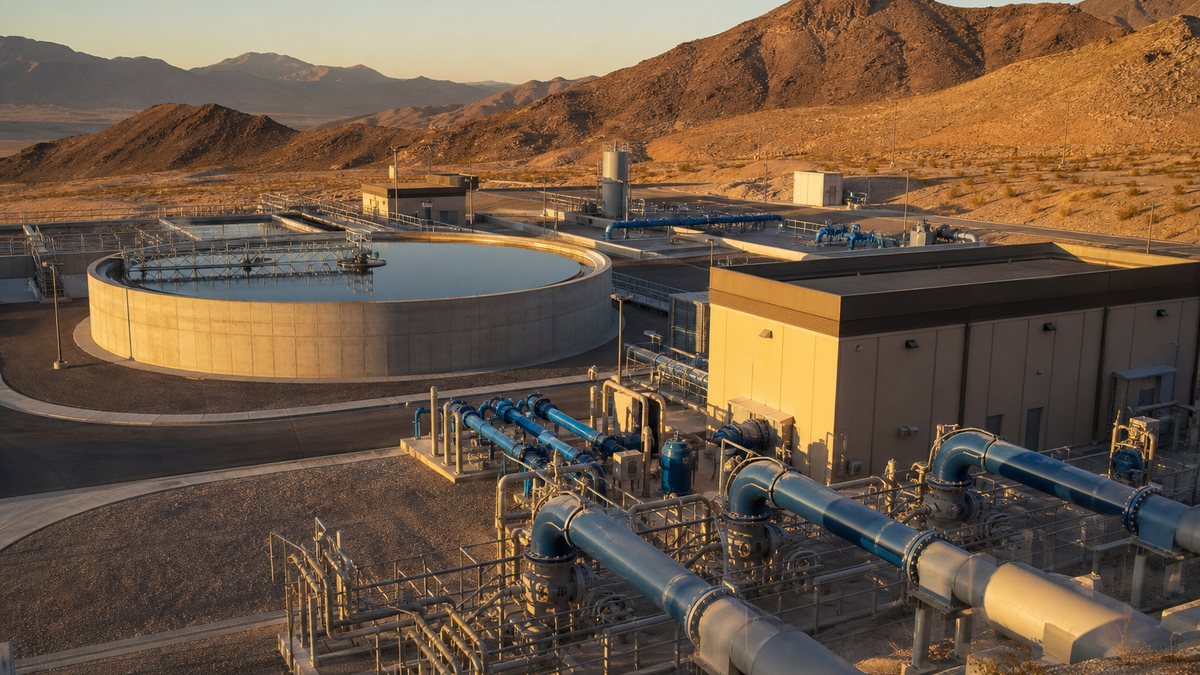
SNWA's third intake and its Low Lake Level Pumping Station are complete. The agency has said this infrastructure secures Southern Nevada's access to its Colorado River water regardless of Lake Mead's elevation. That doesn't create more water, but it removes the fear of a physical "can't pump" scenario that worried the valley a decade ago.
4. There's water in the bank
SNWA's 2026 Water Resource Plan reports more than 2.2 million acre-feet of banked and stored water, including credits in Arizona and California water banks, a Southern Nevada groundwater bank and conserved water stored in Lake Mead. Some of those credits come with conditions on when they can be used, but they are a meaningful buffer.
So what's actually constrained?
If indoor water is largely recycled, the binding constraint on growth is consumptive use: outdoor irrigation, evaporative cooling, pools, fountains and anything else that evaporates or soaks into the ground. That's exactly where SNWA and the Nevada Legislature have aimed their rules:
- Nonfunctional turf: a 2021 Nevada law bars using Colorado River water from SNWA member agencies to irrigate nonfunctional grass starting in 2027, covering golf courses, commercial properties, common areas and some school and government sites.
- New development: irrigated grass has been banned in all new development, including residential back yards, since 2021. New golf courses are prohibited.
- Pools: a 2022 SNWA resolution limits new residential pools to 600 square feet of surface area.
- Resorts: new resorts must submit water efficiency plans, and new outdoor fountains are restricted unless supplied by private water rights.
- Evaporative cooling: SNWA has a moratorium on evaporative cooling for new commercial and industrial buildings. According to the Las Vegas Review-Journal, applications haven't been accepted since September 2023 and no permits with evaporative cooling have been approved since February 2024.
- Drought triggers: under AB 220, SNWA's plan notes that if Nevada's allocation falls to 270,000 acre-feet or less and the board acts, single-family water use could be capped at about 163,000 gallons a year. The law also has agencies look at whether there is an adequate water supply for new development.
Notice that Nevada's 2027 allocation of 250,000 acre-feet is below the 270,000 acre-foot level written into that law. That doesn't automatically trigger anything, since the board has to act, but it tells you how close the valley is to rules that would directly affect homeowners and builders.
Las Vegas doesn't have a water problem so much as a water-type problem. An apartment building and a lawn can draw from the same pipe, but the apartment building sends most of its water back to the lake. Expect policy, pricing and approvals to keep rewarding indoor, recycled use and penalizing anything that evaporates.
Who wins: our ranking
1. Dense, indoor-heavy projects
Multifamily, infill, mixed-use, medical, hospitality and office projects use water mostly indoors, where it gets recycled. They also fit the direction of land policy we covered in our posts on Henderson and the southwest valley and the lands bill. We expect these to move through approvals with the least water friction.
2. Owners of water-efficient existing assets
Buildings that already meet the new rules, with desert landscaping, efficient fixtures and dry or hybrid cooling, avoid conversion costs and look better to lenders and tenants. As 2027 turf rules take effect, the gap between compliant and non-compliant properties should show up in operating costs and valuations.
3. Water technology and efficiency contractors
Turf conversion, smart irrigation, leak detection, water reuse, dry cooling and industrial water treatment all have a mandated pipeline of work. Businesses that serve commercial property owners, HOAs, resorts and industrial users, not just homeowners, are best positioned.
4. Industrial users that design for dry cooling
Data centers and manufacturing are still coming to Southern Nevada, but on different terms. The Review-Journal reported that data centers in Southern Nevada consumed about 716 million gallons in 2024, and that developers have asked NV Energy for 21,000 to 22,000 MW, more than double the utility's roughly 9,000 MW peak. Operators who plan around closed-loop or air-based cooling, and who secure power early, will have the advantage. We covered that dynamic in our Apex data center insight.
5. Holders of entitlements and water commitments
When the rules tighten, the value of what's already approved goes up. Projects with entitlements, will-serve commitments and approved water efficiency plans in hand have a head start that a new applicant can't buy.
Who may be disappointed
- Water-hungry concepts: lagoon communities, large decorative water features, turf-heavy amenities and anything that relies on evaporative cooling. Some may still be built using private water rights, but they carry regulatory, cost and reputational risk.
- Large-lot, lawn-centric subdivisions: the buyer and the rulebook have both moved on. Plans that assume a traditional suburban yard are fighting the policy.
- Anyone expecting a quick legal resolution: interstate water litigation tends to be slow. Underwriting that assumes the courts will restore full allocations soon is a bet, not a base case.
- Power-sensitive operations: lower lake levels mean less hydropower from Hoover Dam. Businesses whose margins depend on cheap power should expect pressure, not relief, over the next few years.
- Investors who ignore the issue: water headlines affect perception. Capital partners outside Nevada will ask the question, and a sponsor without a clear answer will struggle to raise money.
Weighing a Las Vegas project where water matters?
We help investors, landowners and operators pressure-test deals, structure partnerships and plan execution, including the water and power questions that now come up in every approval. Let's talk through what you're looking at.
Three scenarios we're planning around
Nobody knows how the Colorado River will look in 2030, so we think in ranges. These are our scenarios, not forecasts:
| Scenario | What it looks like | What it means for Las Vegas investors |
|---|---|---|
| Managed squeeze | Cuts stay near 2027–2028 levels; the lawsuit drags on or leads to a negotiated deal; Lake Mead stabilizes after a wet year or two | Growth continues; conservation rules tighten gradually; water-efficient assets outperform; water costs rise modestly |
| Deeper cuts | Dry years continue and federal reductions move toward the deeper end of the framework | Drought rules like AB 220 caps come into play; tougher scrutiny for new connections and consumptive uses; banked water gets drawn down; approvals slow for water-heavy projects |
| Reset | Courts or a new basin-wide deal rebalance cuts between Upper and Lower Basin states | More certainty and less headline risk; Southern Nevada's conservation record becomes a selling point for capital |
Our base case is the "managed squeeze." Southern Nevada's portfolio is built to absorb cuts of the size announced for 2027, and the valley has a long record of adapting faster than the river changes. But we'd stress-test every project against "deeper cuts," because that's the scenario that would change what gets approved.
Where we see opportunity
Value-add on non-compliant commercial property
With nonfunctional turf rules taking effect in 2027, plenty of older office parks, retail centers and HOA common areas need conversions. Owners who move early can lock in lower operating costs and a better story for tenants. Buyers who understand the conversion cost can price it in and capture the upside.
Water-light housing
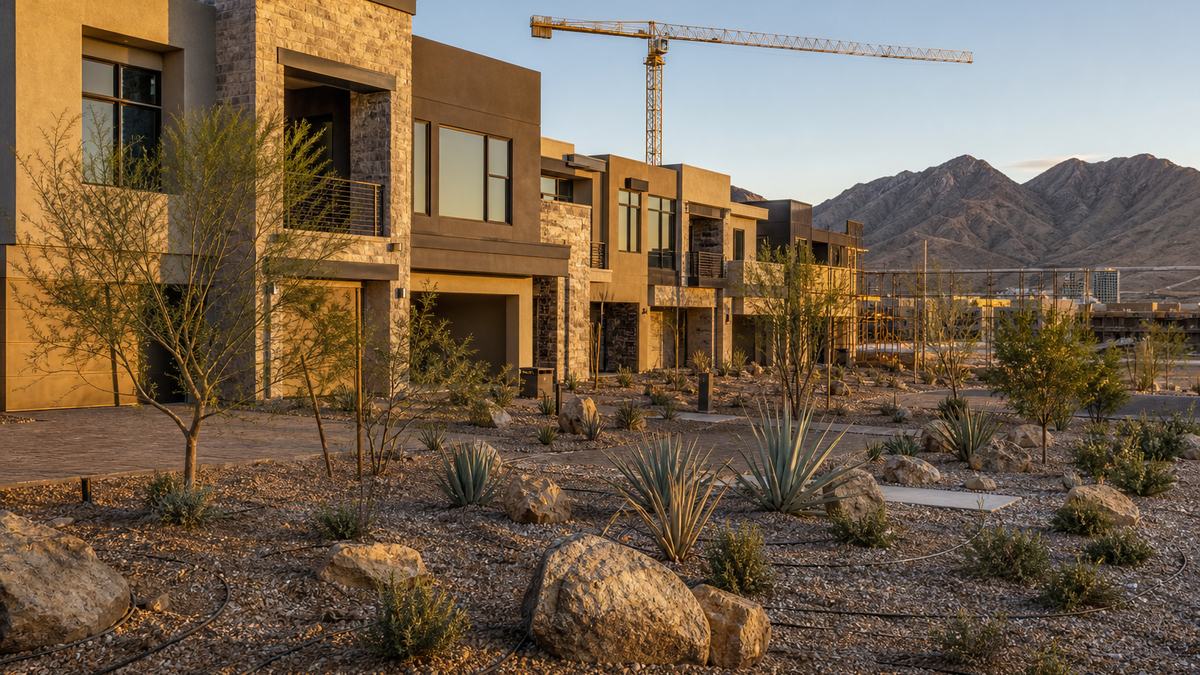
Townhomes, small-lot and multifamily product with desert landscaping is what the rules, the land supply and the affordability math all point toward. It's also the topic of our next insights on housing and build-to-rent in the valley.
Industrial water services
Industrial and commercial users need treatment, reuse, monitoring and compliance support. This is a field we know: InTooWin's principals were involved in building, operating and exiting Bullrock Water, an industrial water management business, and our current pipeline includes Project Flintstone, an agricultural infrastructure joint venture with Livestock Water & Energy, whose vacuum membrane distillation technology produces hospital-grade water. We think operators who treat water as a resource to be managed, not a utility bill, will find willing customers in Southern Nevada.
Power and cooling solutions
Less hydropower and more demand from data centers means pressure on power supply and cost. On-site solar, storage, efficient cooling and demand management are practical ways for commercial owners to protect margins.
Patient capital for approved projects
When water headlines spook out-of-state capital, well-structured projects with approvals in hand can be undercapitalized. That's where joint ventures between local sponsors and family offices can make sense, if the deal is underwritten honestly.
The risks we'd watch
- The lawsuit and the next guidelines: the framework calls for new operating guidelines every two years. The 2029–2030 numbers matter as much as 2027's.
- Lake Mead's path: watch Reclamation's monthly 24-Month Studies, especially as the lake approaches the 1,025-foot level that affects how some conserved water can be used.
- Local rule changes: SNWA board actions, Clark County and city ordinances, and the 2027 Nevada legislative session could all bring new rules on consumptive use, data centers or new connections.
- Water and power pricing: conservation costs money, and lower Hoover output may raise power costs. Build both into operating budgets.
- Capital perception: lenders and LPs read the same headlines you do. A clear water story is now part of the pitch.
- Timing: rule changes, plan reviews and approvals can stretch schedules for projects that need special water accommodations.
How we would approach it
If we were advising a client, or deploying our own capital, in Southern Nevada today, this is the framework we'd use:
- Separate indoor from consumptive use. Model what a project will consume, not just what it will draw. Indoor, recycled use is a strength; evaporation is a liability.
- Underwrite to the tougher rules. Assume today's conservation rules get stricter, not looser, and price compliance in from day one.
- Lock in what you can early. Entitlements, will-serve letters and approved water efficiency plans are worth real money in a tightening environment.
- Design for dry cooling and desert landscape. It's cheaper to build it in than to retrofit when the next rule arrives.
- Pair water with power. Treat power availability and cost as part of the same constraint, especially for industrial and data center deals.
- Stage capital and use partnerships. Options, phased closings and joint ventures keep flexibility while the Colorado River rules are in court.
- Watch the milestones. Court rulings, the 2029–2030 guidelines, SNWA board actions and Lake Mead's spring runoff will tell you more than any headline.
This is the same discipline we bring to every engagement on our services side: structure the deal so it survives the bad case, and let the good case be upside.
The bottom line
Lake Mead's decline is serious, and the fight over the Colorado River is far from over. But Southern Nevada has spent twenty years preparing for this, and its biggest advantage is simple: most of the water it uses indoors comes back. The valley will keep growing. What changes is the shape of that growth, toward denser, water-light, indoor-heavy projects, and away from anything that evaporates.
The investors who do well here will be the ones who treat water as a design and underwriting decision from day one, not an afterthought for the engineers. If you're weighing a project in Las Vegas where water, power or approvals are part of the question, we'd be glad to compare notes.
Frequently Asked Questions
What is the Lake Mead water level right now?
How much Colorado River water does Nevada get?
Is Las Vegas running out of water?
Why did Nevada sue over the Colorado River plan?
What are return-flow credits?
Will water rules stop new development in Las Vegas?
What happens to data centers in Southern Nevada?
Does the turf ban affect commercial property owners?
Is now a good time to invest in Las Vegas real estate given the water situation?
Does InTooWin advise on water-sensitive projects?
Talk to InTooWin about your next deal
Direct principals, not middlemen. We bring capital relationships, deal structure and hands-on execution to projects in Las Vegas and beyond.
Sources
- U.S. Department of the Interior — Interior finalizes plans for 2027–2028 Colorado River operations
- Bureau of Reclamation — Future Colorado River Operations decision documents
- Greenberg Traurig — Post-2026 Colorado River framework draws immediate legal challenge
- Nevada Current via Maven's Notebook — Arizona joins Nevada lawsuit over Colorado River cuts
- Office of the Arizona Governor — Arizona joins Nevada in Colorado River lawsuit
- Bureau of Reclamation — October 2026 24-Month Study
- October check on the Colorado River's reservoirs (summary of the October 2026 24-Month Study)
- Las Vegas Weekly — Southern Nevada confronts a challenging future after water cuts
- SNWA — 2026 Water Resource Plan, Chapter 1
- SNWA — 2026 Water Resource Plan, Chapter 3
- SNWA — Conservation initiatives
- The Nevada Independent — Did Las Vegas cut its water use in half between 2002 and 2025?
- Las Vegas Review-Journal — Data centers want to triple Nevada's energy grid capacity
Related
This article is commentary and opinion based on publicly reported information as of October 2026. It is not investment, legal or financial advice. Water allocations, Lake Mead projections, regulations and litigation may change; verify current information before making decisions. Images are AI-generated illustrations, not photos or official renderings of any specific project or facility.