
Downtown Las Vegas: Real Comeback or Hype? Follow the Dirt, Not the Neon.
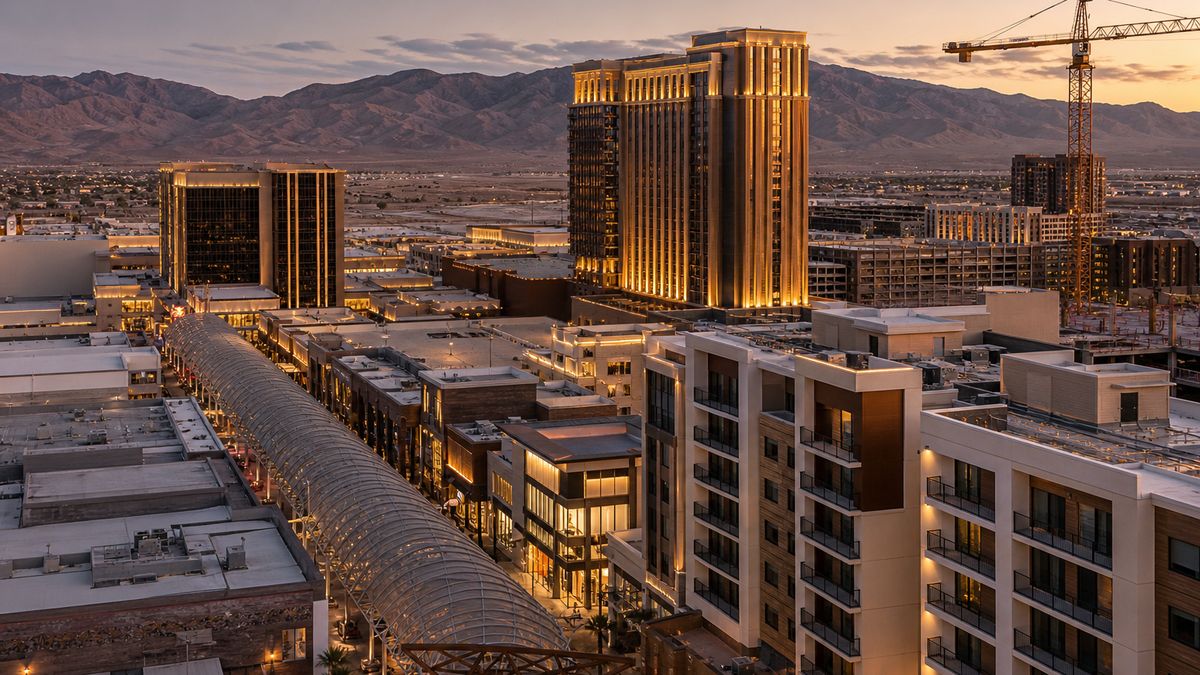
Every few years someone declares a downtown Las Vegas comeback. Circa opened in 2020. Fremont East filled with bars and music venues. The Arts District started pre-leasing luxury apartments. And in 2026 the headlines kept coming: a 1,000-home Lennar community breaking ground on the old Cashman Center site, the city shopping an 11-acre parcel next to the Fremont Street Experience, a new performing arts center for the old Eclipse Theater, and a court-approved sale of the Downtown Grand out of receivership.
So is it real this time, or is it hype? Our honest answer is both, and the difference matters if you have capital, land or a business plan downtown. The tourist core is having a hard stretch. The places where people will actually live, park, eat and work are getting more investment than they have in decades. The opportunity is in knowing which story you are buying.
We have spent our careers building, operating and exiting ventures, and we have watched plenty of "districts" get announced long before they showed up. Here is our take on where downtown Las Vegas actually stands at the end of 2026, who wins, who may be disappointed, and how we would approach it.
Downtown is splitting in two: a tourist core under real pressure and a residential and civic edge that is finally getting built. The comeback is real at the edges and unproven in the middle.
- The pressure: downtown hotel occupancy fell to 58.4% in 2025 from 67.1% in 2024, and downtown gaming win was down about 6% in the first two months of Nevada's 2027 fiscal year.
- The build-out: Lennar's 1,000-plus-home Foundry on the Cashman and Grant Sawyer sites, about 1,000 new Arts District apartments reported in pre-leasing, and a new 500-space city garage.
- The wildcards: the city's 11-acre "Downtown Assemblage" (proposals due December 16, 2026) and the Downtown Grand's new owner, which still needs gaming approval.
- Our view: bet on downtown as a neighborhood, not as a second Strip. Underwrite locals and daily traffic first, tourists as upside.
What is actually happening downtown
Let's start with the facts. Here is what has been reported or approved in 2026, according to public sources listed at the end of this article:
| Project | What we know | Status |
|---|---|---|
| The Foundry (Lennar) | More than 1,000 single-family homes and townhomes on roughly 70 acres at the former Cashman Center and Grant Sawyer State Office Building sites; initial prices expected from the $300,000s. The city sold the Cashman site to Lennar for a reported $36 million. | Rezoned to residential in January 2026; ceremonial groundbreaking October 15, 2026 |
| "Downtown Assemblage" RFP | About 11 city-controlled acres bounded by Las Vegas Boulevard, Ogden Avenue, I-11 and the alley between 7th and 8th streets. The city wants hospitality, entertainment, sports, residential, office, green space and civic uses. | Proposals due 5 p.m., December 16, 2026; winner negotiates a Disposition and Development Agreement |
| Downtown Grand | 634-room hotel-casino placed in receivership in early 2026 after a loan default; more than $105 million reportedly owed. Vegas Ventures LLC agreed to buy it. | Sale approved by a Clark County judge October 7, 2026; still needs Nevada gaming approval |
| Circa and The D | Circa finished four previously unbuilt floors in 2025 and started two more in March 2026; ownership has said The D will get a complete renovation. | Under way |
| Arts District parking | Five-story city garage at 1421 S. Casino Center Blvd. with 500 spaces and up to 50 EV chargers. | Scheduled to open September 29, 2026 |
| THIRD Street arts center | Renovation of the old Eclipse Theater at 814 S. 3rd St. into a 52,000-square-foot venue; city approved up to $4.2 million in reimbursements. | Construction targeted June 2027; grand opening targeted August 2028 |
Read that table again and notice where the money is going. Almost none of it is a new casino resort. It is housing, parking, civic land and arts space, plus reinvestment in properties that already exist. That is not a coincidence. It is the market telling you what downtown is becoming.
The hard numbers: the tourist core is struggling
Before anyone gets excited about cranes, look at the operating data. Downtown has roughly 5% of the Las Vegas valley's approximately 155,000 hotel rooms, and 2025 was rough. At a Downtown Vegas Alliance forum in March 2026, Circa vice president Jeff Victor said downtown occupancy fell to 58.4% in 2025 from 67.1% in 2024, and downtown revenue per available room dropped about 15%. He also said his company's earnings fell sharply even in a record revenue year, because costs kept climbing.
2026 has not turned that around yet. According to the Nevada Gaming Control Board, downtown Las Vegas casinos won about $61.5 million in August 2026, down 2.96%, and about $130.0 million for July and August combined, down 6.04% from the prior year. September was weaker: downtown win fell 7.45% to about $82.5 million, while the Strip was up slightly. Citywide, the LVCVA reported about 3.1 million visitors in September, roughly flat year over year, with average daily room rates down 6.3%.
In plain terms: the Strip is holding up thanks to premium players and big events, while the value-oriented visitor that downtown depends on has pulled back. That is the backdrop for every "comeback" headline.
If your downtown plan depends on tourists coming back to 2023 levels, you are making a macro bet, not a downtown bet. The 2026 data says the value traveler is price-sensitive and still cautious. We would not underwrite a recovery we can't see yet.
The part that is real: downtown is becoming a neighborhood
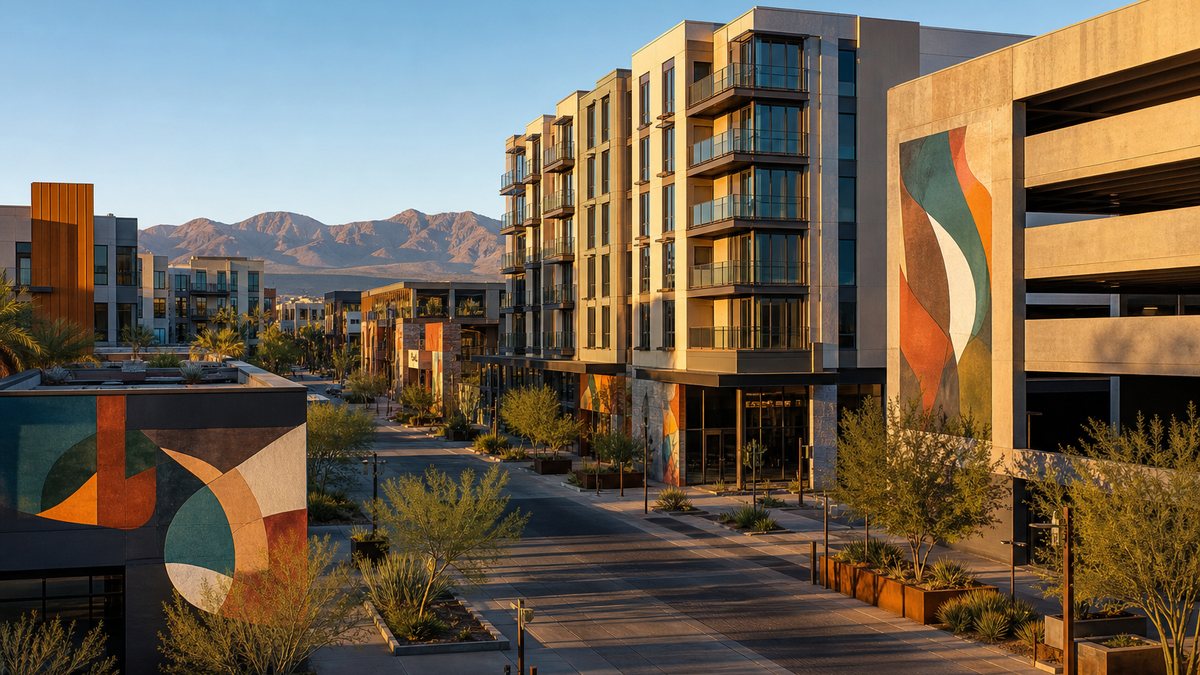
Now the other side. For most of its history, downtown Las Vegas was a casino district with very few people living in it. That is changing faster than most people realize.
- For-sale homes: Lennar's Foundry is a big deal for one reason above all. It brings more than 1,000 owner households to the north edge of downtown at entry-level prices, on land that sat underused for years. Owners stay, shop locally and vote for better services.
- Rentals: a local brokerage reported in mid-2026 that roughly 1,000 new apartments were being pre-leased within about half a mile of the Arts District, including Southern Land Company's Gemma, with 337 units.
- Infrastructure for locals: the new city garage adds 500 spaces to an Arts District that had none in a structure, and the city has raised street parking rates. That is what a district looks like when it starts to have a parking problem, which is a good problem.
- Culture with a business plan: the THIRD Street project is projected by the city to host 200 events and 200,000 attendees a year once running, with repayment required if the nonprofit leaves within five years. That is a modest, disciplined public bet, not a giveaway.
Put those together and you get something downtown has never really had: a daily customer base that doesn't need a plane ticket. That changes what works on the ground floor, from coffee and groceries to fitness, medical and services.
We wrote about why Las Vegas is short on attainable housing in our build-to-rent analysis. Downtown infill is one of the few places in the valley where new homes can go on land that already has roads, water and sewer in place.
Who wins: our ranking
1. Neighborhood retail and services near the new rooftops
The biggest beneficiaries of a residential downtown are businesses that serve residents every day: grocery, pharmacy, coffee, casual dining, childcare, fitness and clinics. The corridors connecting The Foundry, the Arts District and Fremont East are where we would look first.
2. Operators who already own and are reinvesting
Circa finishing its unbuilt floors and the planned renovation of The D are telling. Owners who already control a downtown property can add rooms, refresh product and capture share while weaker competitors struggle. In a tight market, the best-capitalized operator usually wins.
3. Buyers of distressed assets at the right basis
The Downtown Grand went through a full marketing process in receivership: according to court filings reported by Casino.org, 45 parties signed NDAs and nine sent letters of intent. Distress like that creates entry points that didn't exist two years ago, for buyers who can get licensed, fund capital improvements and run the property well.
4. Parking, mobility and event logistics
Arts District growth, First Friday crowds and Fremont Street Experience traffic all need parking and movement. Garages, valet and shuttle operators, and anything that makes it easy to get downtown without a car are practical, cash-flowing plays.
5. The city's long-term tax base
Turning surplus public land into homes and private investment broadens the city's tax base and reduces dependence on gaming. That is the quiet win behind the Cashman sale and the 11-acre RFP.
Who may be disappointed
- Anyone pricing downtown like the Strip: downtown's rate structure, room count and visitor profile are different. Land priced on Strip-style hospitality assumptions will struggle to pencil.
- Tourist-only concepts on Fremont: businesses that rely only on value-oriented visitors are exposed to exactly the segment that weakened in 2025 and 2026.
- "District" speculators near the 11-acre site: a city RFP is the start of a process, not a project. Selection, negotiation, entitlements and financing can take years, and plenty of downtown plans have been announced before.
- Over-leveraged owners: the Downtown Grand story is a reminder that a good location does not save a bad capital structure when rates rise and revenue falls.
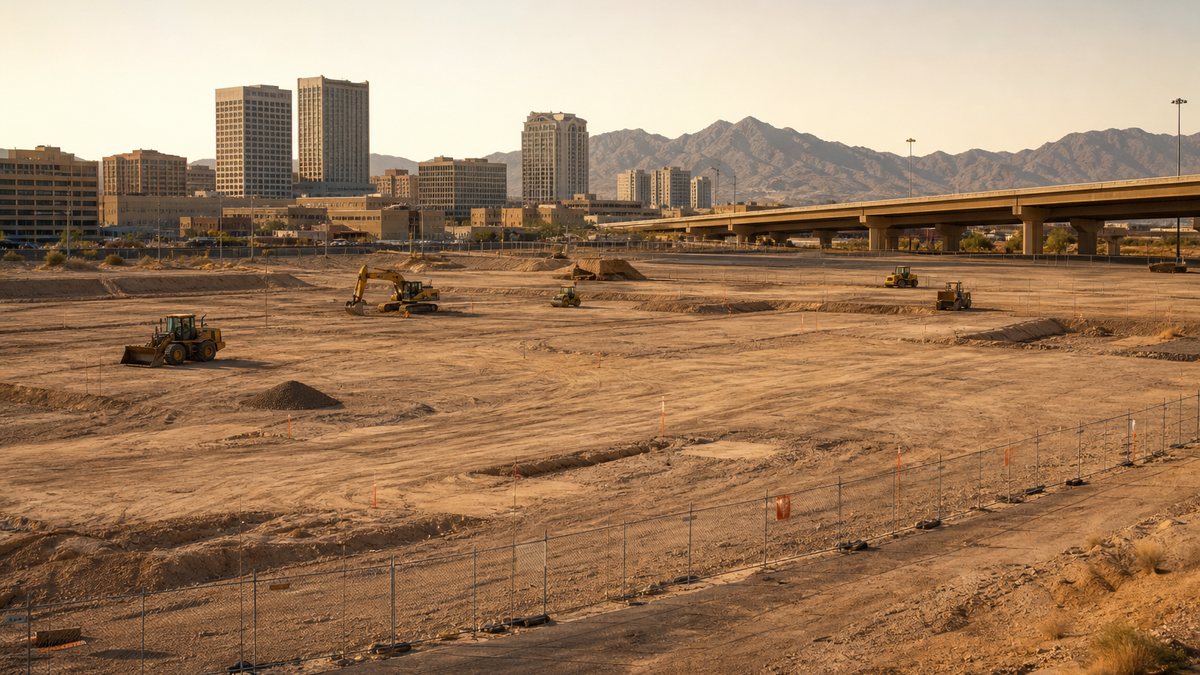
- Investors expecting fast appreciation from The Foundry: it is a multi-year, phased build. The ceremonial groundbreaking happened in October 2026, but demolition and vertical construction take time.
Downtown's comeback is a residential and civic story first and a gaming story second. The smartest money will follow the rooftops, the parking and the public land, not the neon. If a deal only works with a tourism rebound, pass or price it accordingly.
The 11-acre question
The most important unknown downtown is what happens on the city's 11-acre assemblage next to the Fremont Street Experience. Mayor Shelley Berkley called it a "once-in-a-lifetime opportunity," and the list of desired uses is broad: hospitality, entertainment, professional sports, residential, office, green space and civic or public-safety space.
We see three plausible paths once proposals come in on December 16:
| Scenario | What it looks like | What it means for nearby investors |
|---|---|---|
| Anchor deal | A well-capitalized group proposes a sports, entertainment or mixed-use anchor with a clear financing plan | Strongest lift for Fremont East, Ogden corridor land and hospitality; watch for public-financing asks |
| Phased mixed-use | Residential and smaller commercial first, larger elements later as capital allows | Steady, believable demand growth; neighborhood retail and services benefit most |
| Slow or no award | Proposals fall short, negotiations drag or financing doesn't come together | Status quo; values near the site should not price in a project that doesn't exist yet |
Our base case is "phased mixed-use." Large, single-anchor visions get the headlines, but in this rate environment the deals that actually close downtown tend to be phased, residential-led and backed by sponsors who can carry the land. Underwrite to "phased" and treat an anchor as upside.
Looking at a downtown Las Vegas deal?
We help investors, landowners and operators pressure-test opportunities, structure partnerships and plan execution. Tell us what you're looking at and we'll give you a straight answer.
Where we see opportunity
Ground-floor retail for residents
New apartments and homes create demand for everyday services faster than they create demand for destination nightlife. Small-bay retail and service space on the routes between the Arts District, Fremont East and The Foundry is where we would focus.
Value-add hospitality at a reset basis
Downtown's weak occupancy is a problem for current owners and an opportunity for disciplined buyers. Older, smaller hotels and motels near the core can be repositioned as boutique, extended-stay or workforce-oriented lodging, if the purchase price reflects today's numbers, not 2023's.
Workforce and attainable housing
Downtown has existing infrastructure, public land and city partners that want housing. Infill multifamily and attached for-sale product near transit and jobs fits what the city and state are asking for. Partnerships with public agencies can lower land cost but add process, so experienced execution matters.
Parking and mobility assets
As the Arts District densifies and street parking gets more expensive, structured parking and shared mobility become real businesses rather than afterthoughts.
Event and creative services
First Friday, the Fremont Street Experience and new venues like the THIRD Street project all need production, staging, lighting, security, food supply and logistics. Companies that serve multiple downtown venues are best positioned.
If any of these fit what you are working on, our services page explains how we partner on structuring, capital and execution.
The risks we'd watch
- Tourism softness lasting longer: downtown's gaming and hotel numbers have lagged the Strip through 2026. A longer slump pressures operators and the retail that depends on them.
- Rising operating costs: labor, insurance and utilities have climbed faster than revenue for many downtown operators, which squeezes margins even in good revenue years.
- Execution and approvals: the 11-acre RFP, The Foundry's phasing and the Downtown Grand's gaming approval all have steps left. Delays are normal; plan for them.
- Public safety and homelessness perception: fair or not, perception shapes whether locals and visitors walk downtown at night. Watch city investment in safety, lighting and cleanliness.
- New competition for the visitor dollar: Hard Rock Las Vegas is targeting 2027 and the A's ballpark 2028 on the Strip. Both will compete for the same visitors downtown wants. We covered the ballpark in our A's analysis.
- Capital structure: high leverage in a soft market is how good locations end up in receivership.
How we would approach it
If we were advising a client, or deploying our own capital, downtown today, this is the framework we would use:
- Underwrite locals first. Model demand from residents, workers and regional visitors. Treat tourism recovery as upside, not the base case.
- Follow the rooftops. Map The Foundry, Arts District apartments and other new housing, then look at the corridors between them.
- Buy basis, not stories. Downtown distress is creating real entry points. Pay for today's cash flow and current occupancy, not a rendering.
- Keep leverage moderate. Use structures that can survive another soft year: lower debt, staged capital and joint ventures with patient partners.
- Partner with the city where it fits. Public land and incentives can make deals work, but read the obligations carefully, including clawbacks and timelines.
- Watch the milestones. The December 16 RFP deadline, the Downtown Grand's gaming approval, The Foundry's first phase and monthly gaming numbers will tell you more than any press release.
The bottom line
Is downtown Las Vegas a real comeback or hype? The tourist core is not back yet, and the 2025 and 2026 numbers say so plainly. But the neighborhood around it is being rebuilt with real money: owner-occupied homes, apartments, parking, public land and arts space. That is a slower, less glamorous comeback than the headlines suggest, and in our experience it is the kind that lasts.
The winners will be the investors and operators who buy at today's basis, serve the people who live and work downtown, and keep enough flexibility to wait for the visitor side to recover. If you're weighing an opportunity downtown or anywhere in Southern Nevada, we'd be glad to compare notes.
Frequently Asked Questions
Is downtown Las Vegas making a comeback?
What is being built in downtown Las Vegas in 2026?
What is The Foundry in Las Vegas?
What is the 11-acre downtown site the city is offering?
Who bought the Downtown Grand?
How is downtown Las Vegas performing compared with the Strip?
Is the Arts District a good place to invest?
What are the biggest risks of investing in downtown Las Vegas?
How does InTooWin approach downtown opportunities?
Does InTooWin partner on Las Vegas projects?
Talk to InTooWin about your next deal
Direct principals, not middlemen. We bring capital relationships, deal structure and hands-on execution.
Sources
- CDC Gaming — Circa executive on downtown expansion, occupancy and RevPAR (March 2026)
- Nevada Gaming Control Board — August 2026 gaming win report
- CDC Gaming — Nevada gaming win, September 2026
- News 3 Las Vegas — September 2026 visitation (LVCVA)
- FOX5 — The Foundry: 1,000 homes starting in the $300,000s
- News 3 Las Vegas — Groundbreaking near Cashman Field and Grant Sawyer building
- LVSportsBiz — City Council rezones Cashman site for Lennar
- News 3 Las Vegas — City seeks proposals for 11 acres near downtown
- Casino.org — Buyer agrees to purchase Downtown Grand out of receivership
- Card Player — Judge approves Downtown Grand sale
- Erica LeMarr Group — Arts District garage, parking and apartments (July 2026)
- The Center Square via Yahoo — Las Vegas approves $4.2 million for new arts center
Related
This article is commentary and opinion based on publicly reported information as of November 2026. It is not investment, legal or financial advice. Project details, costs and timelines may change; verify current information before making decisions. Images are AI-generated illustrations, not official project renderings or photos.