
Is Las Vegas Over-Venued? Why the Next Arena Is a Different Bet.
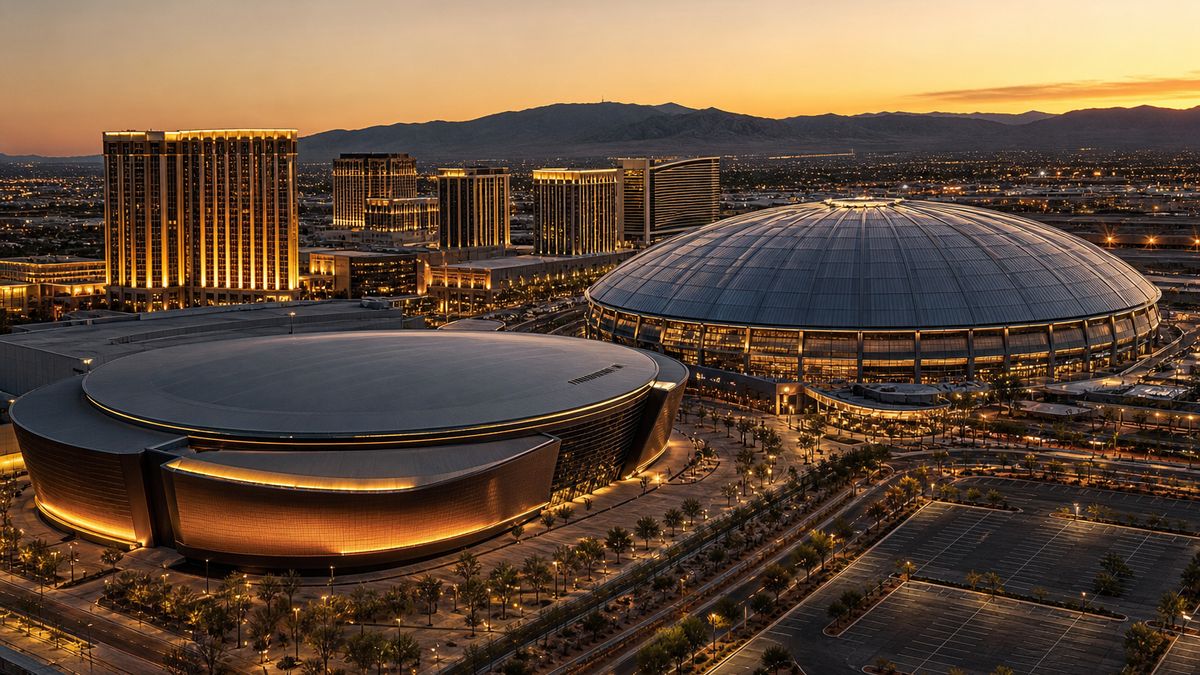
Ten years ago, the question of whether Las Vegas was over-venued would have sounded absurd. The city had casino showrooms, a few arenas and no major-league teams. Today it has an NFL stadium, an NHL arena, the Sphere, a Formula 1 street race through the heart of the Strip, a $2 billion ballpark under construction and at least half a dozen groups pitching a new NBA arena. Each new project arrives with an economic impact study and a rendering. Very few arrive with an honest answer to the question that matters to investors: how many big rooms can one city fill?
We've spent our careers building, operating and exiting businesses, and our principals worked on the 320-acre, $283 million Legacy Sports Complex in Mesa, Arizona. We like sports-anchored development. We also know that the value a venue creates rarely lands where the press release says it will. So here is our view on the Las Vegas venue boom: what has worked, what the NBA race really decides, who is likely to win and lose, and where we think the smart money goes next.
Las Vegas is not over-venued for marquee events. It is becoming over-proposed for arenas, and that is where investors need to be careful.
- What's working: Allegiant Stadium, T-Mobile Arena, the Sphere and the Las Vegas Grand Prix each own something the others don't: a team, a technology or a calendar slot.
- What's coming: the A's ballpark (targeting 2028) and a possible NBA team, with at least six arena concepts competing for one franchise.
- The math: the NBA can choose one ownership group and one home. Most arena proposals on the table will not get built as pitched.
- Our view: the safest returns come from the businesses and properties that serve every venue, not from betting on which arena wins.
The venue map today
Start with the facts. Las Vegas has built or committed to more than $6.5 billion of major venues in a decade, and the public has helped fund the biggest ones. According to public reporting and project disclosures:
| Venue | Opened | Reported cost | Capacity | Anchor |
|---|---|---|---|---|
| T-Mobile Arena | 2016 | About $375 million | About 17,500 for hockey; up to 20,000 for concerts | Vegas Golden Knights, fights, concerts |
| Allegiant Stadium | 2020 | About $1.9 billion, including $750 million in room-tax-backed bonds | 65,000 for NFL games | Raiders, stadium tours, fights, college football |
| Sphere | 2023 | About $2.3 billion | About 17,600 seated | Immersive films and concert residencies |
| Las Vegas Grand Prix | 2023 | Private, with a 39-acre Grand Prix Plaza | Street circuit on the Strip | Formula 1, now contracted through 2037 |
| A's ballpark | Target 2028 | About $2 billion, including up to $380 million in public funding | About 33,000 | Athletics (81 home games a year) |
| NBA arena | Not decided | Proposals range from about $2–3 billion for an arena to $10 billion for a full campus | 18,000–25,000 proposed | A possible expansion team |
That doesn't count MGM Grand Garden Arena, Michelob Ultra Arena, the resort theaters, UNLV's venues or the new rooms that open every year as resorts reinvent themselves (we covered one of those in our look at the Mirage becoming Hard Rock Las Vegas). By any measure, this is one of the densest concentrations of large venues in the world.
What the numbers say about demand
The early venues have performed. According to the Raiders' 2025 impact report, Allegiant Stadium generated an estimated $1.1 billion in economic impact in 2025, with more than $281 million in gross revenue from live music and entertainment, and 62% of visitors saying they came to Las Vegas specifically for a stadium event. Pollstar named it Stadium of the Year in 2026, and the calendar ahead includes the 2027 College Football Playoff championship, the 2028 men's Final Four and Super Bowl LXIII in 2029.
The Sphere, after a costly start, is now growing fast. Sphere Entertainment reported Sphere segment revenue of $226.4 million in the second quarter of 2026, up 29% year over year, with adjusted operating income up 60% to $39.9 million. The Wizard of Oz at Sphere had passed $400 million in ticket sales and three million tickets by mid-June 2026, and the company has picked Abu Dhabi for its next large Sphere.
Formula 1 has gone from a bumpy debut to a long-term fixture. In June 2026, Las Vegas Grand Prix, Inc., Clark County and the LVCVA signed a 10-year extension through 2037. Organizers report $3.2 billion in cumulative economic impact since 2023 and $43 million in state and local taxes from the 2025 race. The 2026 race runs November 19–21.
Now the other side. Las Vegas welcomed about 38.5 million visitors in 2025, down 7.5%, according to the LVCVA. In August 2026, visitation fell another 4.3% year over year to about 3.03 million, occupancy was 74.1% and average daily rates were down 7.4% to $150, even as convention attendance rose 6%. We dug into those numbers in our tourism reset analysis.
The venues are not the problem. In a softer tourism market, the big rooms are among the few things that reliably create new trips. When 62% of a stadium's visitors say they came for the event, that is demand Las Vegas would not otherwise have. The question isn't whether venues work here. It's whether the next one adds new demand or simply splits the existing calendar.
The NBA race: one franchise, many arenas
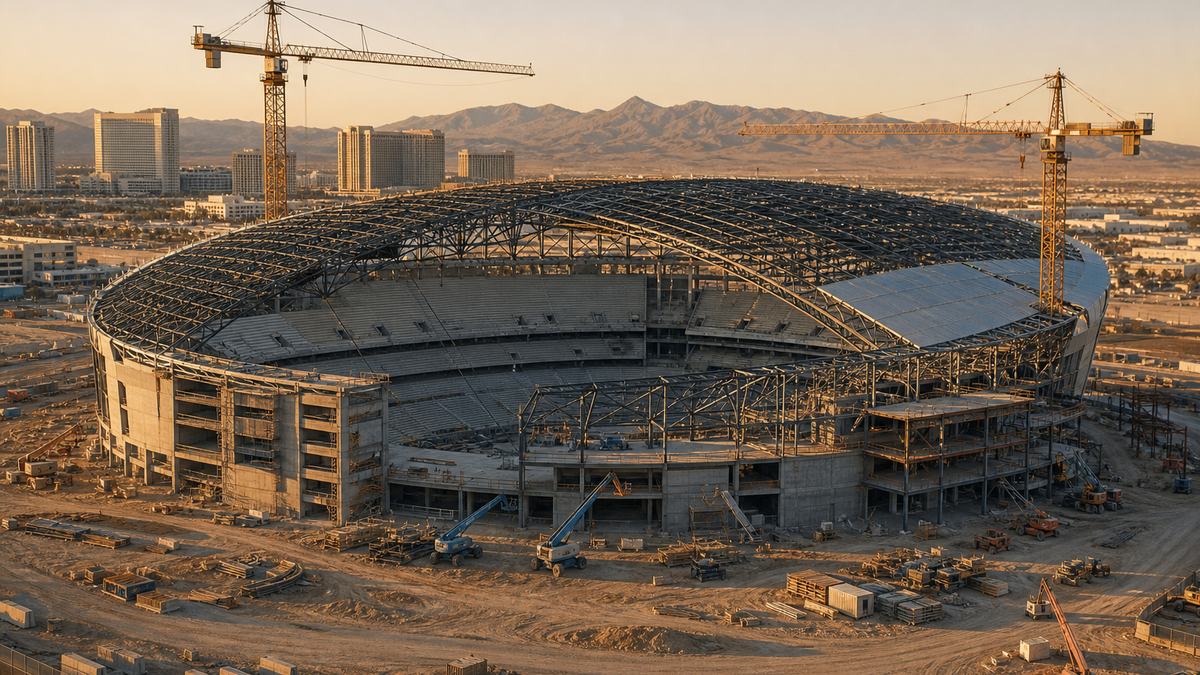
In March 2026, the NBA's Board of Governors authorized the league to formally explore expansion to Las Vegas and Seattle, and it hired PJT Partners to evaluate markets, ownership groups and arenas. By September, reporting identified three ownership groups on the shortlist for Las Vegas:
- Bill Foley and Jerry Colangelo, whose plan reportedly centers on T-Mobile Arena, home of Foley's Golden Knights, with upgrades.
- Nancy Walton Laurie and Bill Laurie, joined in October by Egon Durban, reportedly considering a new arena near Allegiant Stadium. The Review-Journal reported on October 17 that this group was seen as the leading contender.
- Steve Apostolopoulos and Marc Lasry, a former Milwaukee Bucks owner.
Meanwhile, the arena proposals have multiplied, many of them independent of any ownership group:
| Proposal | Location | What's been reported |
|---|---|---|
| AREA15 arena (Fisher Brothers) | About 50 acres west of I-15, within city limits | 18,000–20,000 seats; estimated $2–3 billion; letters of support from Mayor Shelley Berkley and Councilwoman Olivia Diaz; no ownership partner announced |
| Diamond Arena | Las Vegas Boulevard and Four Seasons Drive, across from Mandalay Bay | 21,212 seats; says it completed its land assembly in June 2026; a private jet terminal is planned next door by a separate developer |
| Oak View Group | Las Vegas Boulevard South at Blue Diamond Road | Site proposal from an experienced arena developer |
| LVXP | Next to Fontainebleau on the north Strip | Arena within a planned luxury hotel and residential project |
| Starr Vegas | 63 acres at Starr Avenue and Las Vegas Boulevard South | A reported $10 billion campus with a 25,000-seat arena, retail and hotels |
| Downtown / Symphony Park | Downtown Las Vegas | Pursued by the mayor; no formal plan made public |
The league has targeted an expansion decision by the end of 2026, but Commissioner Adam Silver said on October 20 that actual expansion is still several seasons away. The reported expansion fee is in the range of $12–13 billion, with a new arena costing $2–3 billion on top.
This is the part of the venue boom where investors can get hurt. One franchise means one winning arena. If the winning group already controls an arena, or brings its own site, every other proposal becomes a land story looking for a new anchor. Underwrite any arena-adjacent parcel as if the NBA picks someone else, and treat a win as upside.
So, is Las Vegas over-venued?
Our answer has three parts.
For marquee events: no
Las Vegas competes with the world for Super Bowls, Final Fours, title fights, F1 and the biggest stadium tours. Those events want a destination with airlift, hotel rooms, nightlife and a venue that can handle the production. Las Vegas has all four. A 65,000-seat stadium and a ballpark with a fixed roof are complementary, not competitors: one hosts the 20 biggest nights of the year, the other hosts 81 baseball games plus whatever else it can book.
For arena-scale concerts and residencies: getting close
The 15,000–20,000-seat tier is where crowding is real. T-Mobile Arena, MGM Grand Garden Arena, the Sphere and a long list of resort theaters already chase the same touring acts and residencies. A new 18,000–21,000-seat NBA arena would need roughly 41 home games plus a large slate of concerts to make its numbers work, and many of those concerts would come from rooms that already exist. That's a shift in market share, not new demand.
For proposals: yes
Six-plus arena concepts for one possible franchise is over-supply on paper. That's normal in a hot market, but it means land prices near some of these sites already reflect hope as much as fundamentals.
Who wins as the venue boom continues
1. Whoever controls a calendar
Teams, a long-term race contract and a one-of-a-kind venue each own guaranteed dates. Those are the assets with pricing power. The Sphere's turnaround shows that a differentiated product can win even in a crowded field.
2. Service businesses that work every venue
Security, staffing, cleaning, catering supply, staging, rigging, AV, lighting, transportation and logistics all scale with the total number of events, regardless of which venue hosts them. A company serving five venues is diversified; a company tied to one arena is not.
3. Mid-price hospitality within easy reach
Fans, crews, media and team staff need rooms below Strip luxury rates, especially when ADRs swing on event weeks. Well-run select-service, extended-stay and apartment-hotel products near the I-15 corridor can capture that demand.
4. Mobility and parking
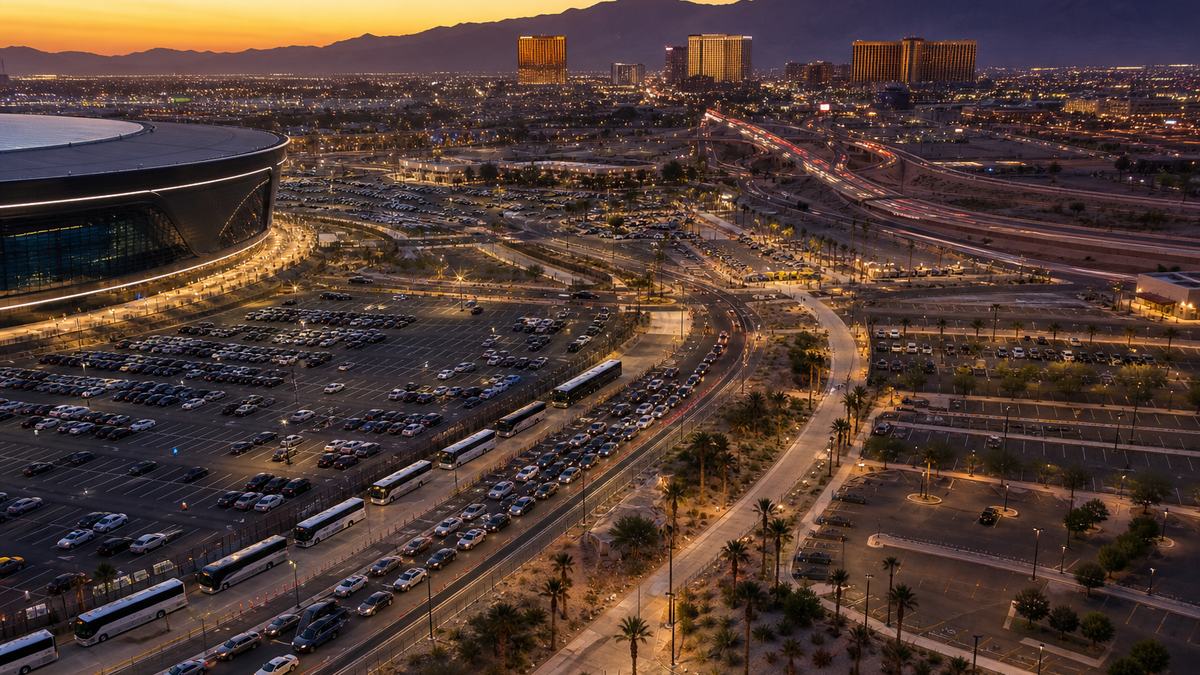
Every new venue adds tens of thousands of arrivals and departures to the same corridor. Parking, shuttles, rideshare staging and crowd-flow technology are practical, cash-flowing plays. The F1 street circuit alone shows how much value sits in moving people around the Strip.
5. Industrial and flex space for event operations
Staging, fabrication, equipment storage and fleet yards near the resort corridor are scarce and often overlooked. As we noted in our Apex industrial analysis, industrial land in the valley is tightening.
Who may be disappointed
- Losing arena sites: land assembled for an NBA arena that doesn't get the team will need a new plan, and the market will know it.
- Speculative buyers near proposals: anyone who paid a premium for proximity to an arena that hasn't been chosen.
- Mid-size venues without a hook: if a new arena arrives, older rooms without a team, technology or residency anchor will feel it first.
- Taxpayers expecting more: Las Vegas has already committed $750 million in room-tax bonds to Allegiant and up to $380 million to the ballpark. Appetite for a third subsidy may be limited, and independent research on stadium subsidies is mixed at best.
- Game-day-only concepts: 41 NBA home games or 81 baseball dates still leave most of the year without a game.
Weighing a deal tied to a Las Vegas venue?
We help investors, landowners and operators pressure-test assumptions, structure partnerships and plan execution. Tell us what you're looking at and we'll give you a straight read.
Where we see opportunity
We'd focus on assets that earn from the whole venue ecosystem, not a single building:
- Event-services platforms: buying or building a company that serves multiple venues and resorts, with multi-year contracts and room to consolidate smaller operators.
- Flexible hospitality: select-service or extended-stay properties with good access to the Strip, I-15 and the airport, priced to win on event weeks and survive on ordinary ones.
- Mobility real estate: surface lots, structured parking and staging sites that can be repositioned later as the corridor densifies.
- Optioned land, not owned land: where an arena outcome matters, control land through options or joint ventures until the NBA decides, rather than buying at today's hope-filled prices.
- Local-facing food, beverage and entertainment: concepts near neighborhoods and the 215 Beltway that capture pre- and post-event spending from residents, who are the most repeatable customers any venue has.
These are the kinds of plays we evaluate through our capital raising, deal structuring and execution services. We're direct principals, not middlemen, and we prefer joint ventures where operators, landowners and capital sit on the same side of the table.
The risks we'd watch
- Tourism softness: visitation fell 7.5% in 2025 and was still down year over year in August 2026. Venues create trips, but they can't fully offset broader affordability pressure.
- Calendar saturation: more rooms competing for the same tours can push down rents and deal terms for venue owners.
- NBA timing: even after a decision, the commissioner says expansion is several seasons away. Carrying land through that gap is expensive.
- Financing and construction costs: the A's ballpark cost rose from about $1.5 billion in early projections to about $2 billion. New arenas face the same pressure.
- Public funding politics: any request for incentives will face scrutiny after two large stadium deals.
- Traffic and access: the resort corridor is already congested on event nights. Sites that make arrival harder, not easier, will underperform.
- Water and power: large venues and the hotels around them need utilities, which are a growing constraint across Southern Nevada.
How we would approach it
If we were advising a family office or deploying our own capital around Las Vegas venues today, this is our framework:
- Separate the certain from the possible. Allegiant, T-Mobile, the Sphere, F1 through 2037 and the ballpark are real. The NBA arena is a possibility. Price them differently.
- Underwrite to the venue calendar, not the impact study. Count realistic event dates and attendance, then ask how many of those visitors would have come anyway.
- Prefer multi-venue exposure. Businesses and sites that benefit from any venue winning are better risk-adjusted bets than any single arena.
- Stage commitments. Use options, phased closings and joint ventures until the NBA and the Bally's resort plans around the ballpark firm up. (See our ballpark analysis for how we'd think about the Tropicana site.)
- Back operators. The value in a venue district comes from running parking, hotels, food and services well, every day.
- Plan the exit at the start. Know who buys your asset in five years and why, whether or not the NBA arrives.
The bottom line
Las Vegas isn't over-venued. It has built a sports and entertainment economy that most cities can only envy, and the stadiums, the Sphere and F1 are creating trips the city needs in a softer tourism cycle. But the next phase is different. The NBA race has turned arena development into a competition with one winner, and the land, hotels and businesses tied to the losing sites will have to find another story.
Our advice is simple: own what serves the whole ecosystem, control what depends on one outcome, and let the league make its decision before you pay for it. If you're looking at an opportunity tied to a venue, a district or the resort corridor, we'd be glad to compare notes.
Frequently Asked Questions
Is Las Vegas over-venued?
Is Las Vegas getting an NBA team?
Where would a Las Vegas NBA arena be built?
How much would a new NBA arena in Las Vegas cost?
How much economic impact does Allegiant Stadium generate?
Is the Sphere profitable?
How long will Formula 1 race in Las Vegas?
Is it a good time to buy land near a proposed arena?
What are the safest venue-related investments in Las Vegas?
Can InTooWin help evaluate a Las Vegas venue opportunity?
Talk to InTooWin about your next deal
Direct principals, not middlemen. We bring capital relationships, deal structure and hands-on execution to family offices, investors and operators.
Sources
- TicketNews — AREA15 developer proposes Las Vegas NBA arena amid growing venue competition
- The Stadium Business — Mayor backs new Vegas NBA arena proposal
- News 3 Las Vegas — Diamond Arena completes land acquisition
- 8 News Now — Las Vegas NBA arena proposals
- Business Wire — Sphere Entertainment Co. second quarter 2026 results
- Ministry of Sport — Allegiant Stadium named Pollstar's 2026 Stadium of the Year after $1.1 billion impact
- Yogonet — Formula 1 extends Las Vegas Grand Prix deal through 2037
- TravelPulse — 2026 Las Vegas Grand Prix dates and tickets
- News 3 Las Vegas — Las Vegas tourism drops in August 2026
- Las Vegas Sun — Las Vegas tourism down 7.5% in 2025
- Front Office Sports — A's Las Vegas stadium cost and milestones
- A's Las Vegas ballpark — project overview
- Allegiant Stadium — cost, public funding and capacity
- T-Mobile Arena — cost, capacity and ownership
- Sphere — opening, cost and capacity
Related
This article is commentary and opinion based on publicly reported information as of October 2026. It is not investment, legal or financial advice. Project details, costs, ownership groups and timelines may change; verify current information before making decisions. Images are AI-generated illustrations, not official renderings or photos of any project or venue.